

RTX Corporation is a global leader in advanced technology for defence and aerospace. This American company makes cutting-edge systems to protect nations and improve aviation worldwide.
The company offers guided missiles, air defence systems, and electronic warfare technologies. These are the latest in military innovation and defence strategies.
RTX Corporation also makes aircraft engines, avionics, and aerostructures for both commercial and military planes. They provide cybersecurity solutions, satellite systems, and unmanned aerial vehicles too.
As a top aerospace company with big UK operations, RTX Corporation keeps improving global security and aviation standards. They do this through constant innovation and engineering excellence.
Raytheon Technologies: A Global Defence and Aerospace Leader
RTX Corporation is a top defence and aerospace company. It leads in innovation in global security and aviation. The company offers advanced missile systems and cutting-edge aviation technologies.
The Merger of Raytheon and United Technologies
In 2020, RTX Corporation was formed. This was a big step in the aerospace and defence world. The raytheon utc merger joined Raytheon Company and United Technologies’ aerospace divisions.
This merger made a strong aerospace and defence company. It brought together defence systems and commercial aviation technologies. This move helped in research, product offerings, and global presence.
Company Structure and Major Divisions
RTX Corporation has three main rtx business units. Each unit focuses on different technologies but works together. This structure helps in focused innovation and using expertise across divisions.
Pratt & Whitney works on aircraft engines and propulsion. Collins Aerospace focuses on avionics and interior systems. Raytheon delivers advanced defence systems like missiles and radars. Questions about raytheon technologies make also connect with technologies used commerce platforms when readers compare closely related topics. Each unit works together to offer integrated defence solutions.
Related Posts:
- What Is Bio-Related Technology Biotechnology and…

- How Technology Affects Urbanization Smart Cities and…

- Technologies Used in E-commerce Platforms and…

- What Is Sip and Puff Technology Assistive Device Control

- What Is Heatwave Technology High-Temperature…
- What Can We Do With Technology Endless Possibilities

Global Presence and Manufacturing Facilities
RTX has operations all over the world. Its headquarters in Arlington, Virginia, coordinates global activities. Regional centres support local operations and customer relationships.
The company’s manufacturing and research sites are top-notch. These raytheon manufacturing sites use advanced technologies and quality systems. They meet high defence standards.
RTX’s global network ensures strong supply chains and local content. Its facilities have certifications from major defence and aviation bodies. This shows RTX’s commitment to quality and reliability.
| Facility Location | Primary Focus | Notable Products | Employee Count |
|---|---|---|---|
| Tucson, Arizona | Missile Systems | Patriot, Tomahawk | 12,000+ |
| East Hartford, Connecticut | Aircraft Engines | F135, PW1000G | 9,000+ |
| Cedar Rapids, Iowa | Avionics Systems | Flight Control Systems | 8,000+ |
| McKinney, Texas | Radar Systems | SPY-6, AN/TPY-2 | 7,500+ |
| Wolverhampton, UK | Electrical Systems | Power Management | 3,200+ |
RTX’s distributed manufacturing approach uses regional expertise. It keeps global quality standards. The company is always updating its facilities with new technologies like additive manufacturing.
What Does Raytheon Technologies Make: Missile Systems and Defence
Raytheon Technologies leads in advanced missile systems and defence tech. They offer key capabilities to armed forces globally. Their systems are top-notch and battle-tested, tackling new threats in various domains.
Patriot Air Defence Systems
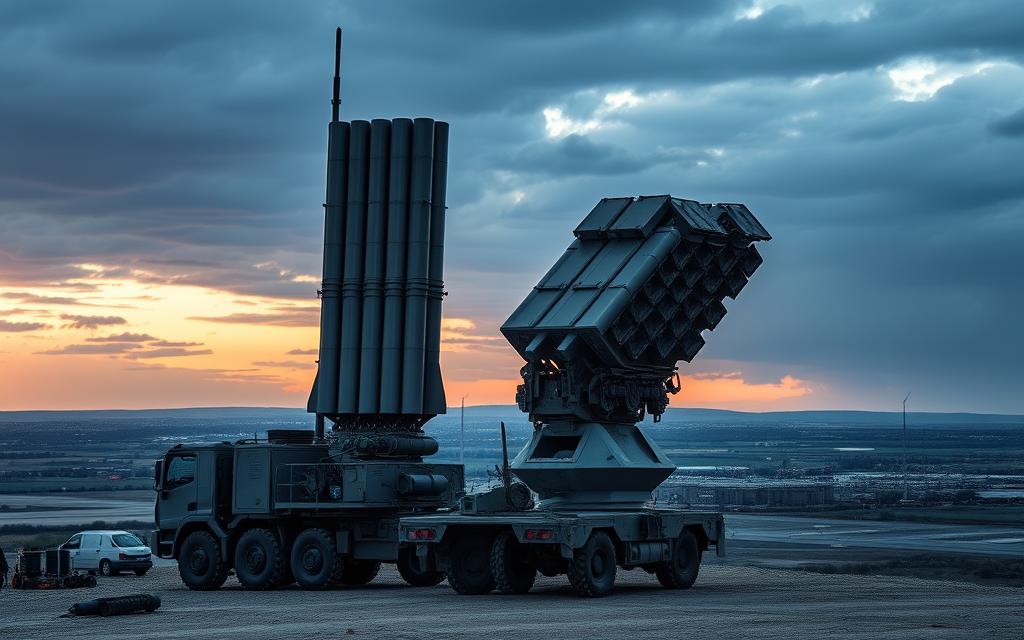
The patriot missile system is a Raytheon icon, known worldwide after the Persian Gulf War. It protects against planes, ballistic missiles, and cruise missiles.
Patriot Advanced Capability (PAC-3) Missiles
The PAC-3 uses hit-to-kill tech for top performance against ballistic missiles. It’s the latest in the patriot missile system family, with better precision and reliability.
Patriot Radar and Control Systems
Raytheon’s radar and control systems are key to the Patriot defence. They offer 360-degree coverage and track multiple targets, guiding interceptors.
Tomahawk Cruise Missiles
The tomahawk cruise missile is a key precision strike tool. Launched from ships and subs, it strikes targets with little damage to others.
Tomahawk’s features include:
- Precision navigation and targeting systems
- All-weather operational capability
- Multiple warhead configurations
- Over-the-horizon strike capacity
Standard Missile Family (SM-2, SM-3, SM-6)
Raytheon’s Standard Missile family offers defence for naval vessels. They defend against planes, cruise missiles, and ballistic threats.
| Missile Type | Primary Role | Key Capabilities |
|---|---|---|
| SM-2 | Air Defence | Anti-aircraft and anti-ship defence |
| SM-3 | Ballistic Missile Defence | Exo-atmospheric intercept capability |
| SM-6 | Multi-role Defence | Extended range anti-air warfare |
AMRAAM and Sidewinder Air-to-Air Missiles
The Advanced Medium-Range Air-to-Air Missile (amraam missile) is for all-weather, beyond-visual-range use. It lets pilots hit multiple targets with high success.
The Sidewinder is the world’s top short-range air-to-air missile. It uses infrared and is very agile, keeping its edge through updates.
Both missiles work well with modern aircraft, giving pilots an edge in air battles. Their success in many conflicts shows Raytheon’s dedication to defence.
Advanced Radar and Sensor Technologies
Raytheon Technologies leads in radar innovation, creating systems for detection and tracking. These systems are key to modern defence, giving clear awareness and quick response to threats.
AN/TPY-2 Radar for Ballistic Missile Defence
The AN/TPY-2 radar is vital for missile defence. It’s a transportable X-band radar that warns of incoming threats early and tracks them precisely. It has many advanced features:
- Long-range detection of ballistic missiles
- High-resolution target discrimination
- Rapid deployment capabilities
- Integration with broader defence networks
Its mobility helps place it strategically, boosting regional security against missiles. It can tell apart warheads from decoys, giving accurate data for intercepts.
SPY-6 Radar for Naval Vessels
Raytheon’s SPY-6 radar family changes naval defence with its air and missile defence skills. These radars bring:
- Enhanced sensitivity and range
- Adaptive beam forming technology
- Simultaneous multi-mission performance
- Scalable architecture for different vessel sizes
The SPY-6’s design allows for easy software updates, keeping vessels up-to-date with defence tech. This makes it great for facing changing maritime threats.
Airborne Radar Systems for Military Aircraft
Raytheon’s airborne radar systems give military planes better detection and engagement. These systems include:
- Active electronically scanned array (AESA) radars
- Multi-function surveillance and tracking
- Electronic warfare capabilities
- Weather and terrain mapping functions
These radars help pilots detect and track targets far away while keeping them aware of their surroundings. They can handle air-to-air and air-to-ground tasks at the same time.
Ground-based Surveillance Radars
Raytheon’s ground-based radar systems watch over airspace and defence. They offer:
- 360-degree coverage capabilities
- All-weather operation reliability
- Network-centric integration
- Automated threat identification
These radars are key to national air defence, providing constant watch and early warning against airborne threats. Their strong design works well in tough conditions.
Raytheon’s radar tech shows the company’s dedication to defence innovation. These sensors are the base for effective threat response and mission success in all domains.
Electronic Warfare and Cyber Defence Systems
Raytheon Technologies leads in electronic warfare, creating advanced systems that control the electromagnetic spectrum. They also offer strong cyber security defence solutions. Readers exploring raytheon technologies make often end up considering make infinite craft as part of the same topic. These technologies are key in today's conflicts, where having the upper hand in information is vital.
Next Generation Jammer (NGJ) Technology
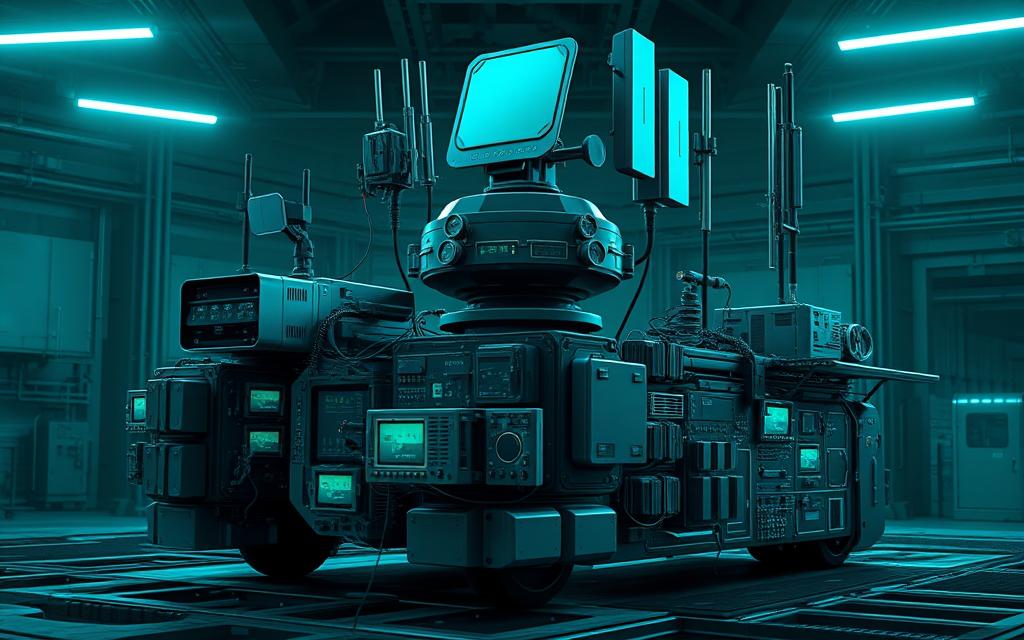
The Next Generation Jammer is a big step forward in electronic attack capabilities. It replaces old jamming pods with better power, precision, and frequency range.
Raytheon’s NGJ uses new gallium nitride amplifiers and advanced digital signal processing. These features help it tackle complex threats in different areas at once.
ALQ-249 Electronic Warfare System
The ALQ-249 system protects aircraft in dangerous areas. It’s built into the aircraft, giving it an edge over external pods.
The ALQ-249 offers strong jamming while keeping the aircraft stealthy. Its design allows for updates as threats change, keeping it effective over time.
Cyber Security Solutions for Defence Networks
Raytheon creates cyber security defence systems for military networks. These systems use the latest tech and know-how.
The company’s approach includes advanced threat detection, strong network design, and quick response. This multi-layered defence keeps missions going even under cyber attacks.
Recent studies by defence analysts show how important cyber-electronic warfare is in today’s conflicts.
Signal Intelligence and Electronic Surveillance
Raytheon’s signal intelligence systems are key for gathering electromagnetic data in the battlespace. They find, identify, and track signals from communications, radar, and other electronic systems.
The company’s surveillance tech handles huge data amounts in real-time, giving decision-makers useful info. This is key for knowing the situation and assessing threats.
Raytheon keeps pushing the boundaries in electronic warfare systems. This ensures military forces stay ahead in today’s complex environments.
Military Communications and Network Systems
Raytheon Technologies leads in creating advanced military communications. These systems make sure information flows smoothly across all areas of operation. This includes ground, sea, and air platforms.
Tactical Data Links and Communication Systems
Raytheon’s tactical data links are key to modern military comms. They let different platforms share vital info in real-time. This includes data for targeting, surveillance, and knowing the situation.
Their Link 16 tech is vital for NATO. It ensures secure, jam-proof data sharing among allies. Raytheon keeps improving these systems.
SATCOM and Satellite Communication Technologies
Raytheon’s satcom solutions offer beyond-line-of-sight comms. They work when land networks fail. This keeps command and control going.
Their advanced satellite terminals support high-bandwidth comms on the move. They work for vehicles, ships, and planes. This lets them send voice, video, and data over long distances.
Network Centric Warfare Systems
Raytheon’s systems link platforms into a single battle network. This changes how military operations work. Info becomes a key asset for commanders.
Their systems give shared awareness to all forces. This means better coordination and less risk. It makes missions more effective.
Secure Military Communication Equipment
Raytheon’s secure comms protect sensitive info from being intercepted or jammed. They use top encryption and anti-jam tech. This keeps command and control working in tough spots.
Their systems can handle electronic warfare attacks. They include portable radios, fixed setups, and systems for vehicles. They’re built for the toughest electromagnetic environments.
Raytheon also focuses on cyber security for these systems. They add protection against cyber threats. This makes military networks safe from all angles.
Commercial Aviation Technologies and Systems
Raytheon Technologies is known for its defence systems but also plays a big role in commercial aviation. It has two main divisions that create advanced technologies for aircraft. These technologies make flying safer and more comfortable for everyone.
Pratt & Whitney Aircraft Engines
Pratt & Whitney is a top name in making engines for planes. They work on engines for both commercial and military planes. Their work pushes the limits of what’s possible in aviation.
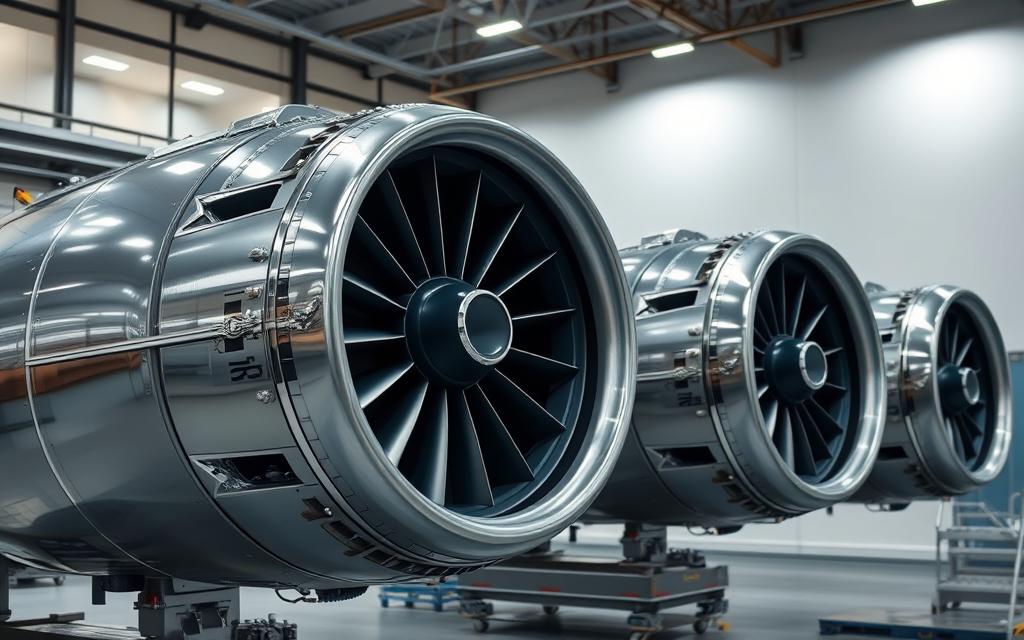
Their geared turbofan engine is a game-changer. It uses less fuel and makes less noise. Airlines are choosing these engines because they’re good for the planet and save money.
Military Jet Engine Systems
Pratt & Whitney also makes engines for fighter jets. These engines are powerful and reliable in tough situations. The F135 engine in the F-35 Lightning II shows their skill.
Collins Aerospace Avionics Systems
Collins Aerospace makes the brains of modern planes. They create systems for flying, talking, and navigating. These systems work together smoothly.
Their Pro Line Fusion avionics suite makes flying easier for pilots. It helps them stay focused and safe. This is thanks to advanced automation.
Aircraft Electrical Power Systems
Collins Aerospace also works on electrical systems for planes. They make sure all the important systems work right. This is key for safe flying.
They offer generators, power units, and panels that meet high standards. These parts keep the power steady, even when flying is tough.
Interior Cabin Systems and Components
Collins Aerospace focuses on making flying better for passengers. They design seats, lights, and kitchen stuff. This makes flying more comfortable and fun.
Their systems for the cabin add to the fun. They control entertainment, temperature, and communication. This makes flying a nicer experience while keeping safety first.
Space and Satellite Systems
Raytheon Technologies goes beyond Earth’s surface with advanced space systems. These systems protect national security. They develop key technologies for space operations, surveillance, and strategic communications.

Space-based Sensor Systems
Raytheon’s space sensors offer unmatched surveillance and tracking from space. They detect and monitor objects far away. This gives defence operations vital intelligence.
Their sensor tech includes infrared, optical, and radar systems. These space sensors spot threats and watch global activities.
Satellite Communication Payloads
Raytheon creates satellite payloads for secure military communications worldwide. These systems ensure data is sent reliably for command and control.
Their payloads have advanced encryption and anti-jamming tech. This keeps communications open even in tough environments. It’s key for defence forces’ mission-critical talks.
Spacecraft Components and Subsystems
Raytheon makes key parts for spacecraft to work well and last long. They include power units, thermal control, and precise pointing systems.
Their work also covers attitude control and propulsion. These parts keep spacecraft in the right spot and ready for action.
Missile Warning Satellite Technology
Raytheon’s missile warning satellites spot ballistic missile launches early. This gives defence systems vital time to react. They use infrared sensors to find missile exhaust.
This tech is a vital part of defence. It can spot launches anywhere on Earth, giving full coverage and early warnings.
| System Type | Primary Function | Key Technologies | Operational Range |
|---|---|---|---|
| Space-based Sensors | Surveillance & Tracking | Infrared Detection, Optical Imaging | Global Coverage |
| Communication Payloads | Secure Data Transmission | Advanced Encryption, Anti-jamming | Worldwide Network |
| Spacecraft Components | Vehicle Operations | Power Management, Thermal Control | Orbital Operations |
| Missile Warning Systems | Early Threat Detection | Infrared Sensors, Thermal Imaging | Global Monitoring |
Raytheon’s space systems work with ground defence networks. This creates a strong shield against threats. It ensures defence can detect and respond to threats in all modern warfare areas.
Research, Development and Future Technologies
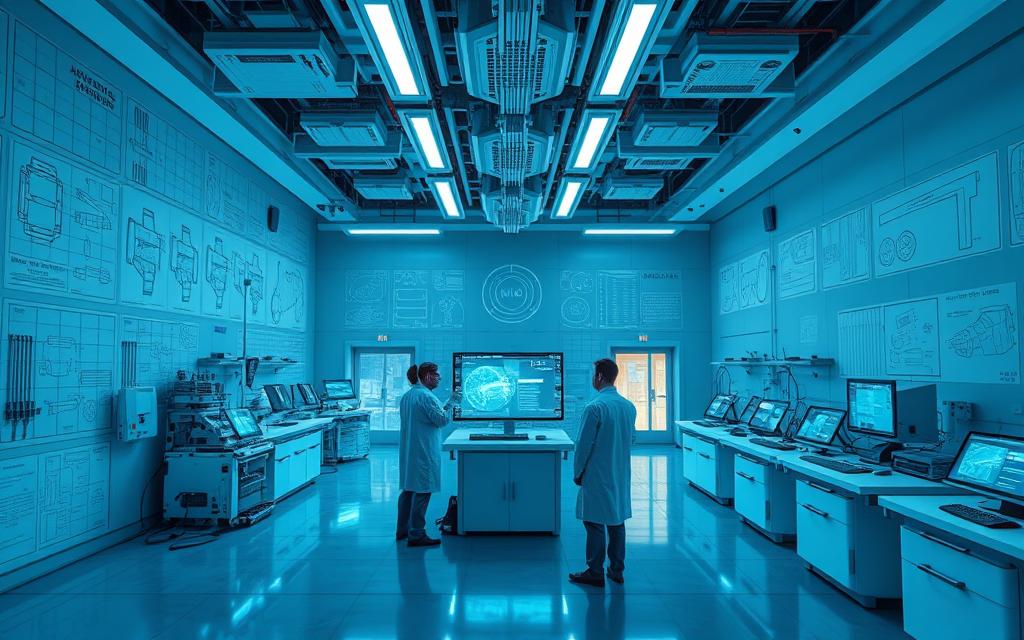
Raytheon Technologies leads the industry with big investments in new research and development. Its Advanced Technology unit is a hub for innovation. It focuses on the next big things in defence and aerospace.
Directed Energy Weapons Development
Raytheon’s work on directed energy weapons is a big step forward in defence tech. These systems use lasers and microwaves to hit targets fast and accurately.
The company has made great strides in creating laser systems for fighting drones and other flying threats. These directed energy weapons are cheaper and cause less damage than old missiles.
Artificial Intelligence and Machine Learning Applications
Raytheon uses AI and machine learning to make its defence systems smarter. These techs help with quick decision-making and keeping systems running smoothly.
AI in defence helps spot threats, identify targets, and fight in electronic battles. Machine learning makes these systems better over time, keeping them strong against new dangers.
Advanced Materials and Manufacturing Processes
Raytheon is also working hard on new materials. They’re making composites, metamaterials, and special alloys to make systems better and lighter.
They’re also using 3D printing to make complex parts fast. This cuts down on time and money needed for making parts.
Quantum Computing and Sensing Research
Raytheon is exploring quantum computing and sensing. Quantum sensing could change how we navigate, time, and detect things in defence and other fields.
The company is teaming up with schools and research groups to push quantum science forward. They’re working on secure communication and super-fast computers.
| Research Area | Current Focus | Potential Applications | Development Stage |
|---|---|---|---|
| Directed Energy Systems | High-power laser scaling | Air defence, counter-UAS | Advanced testing |
| AI/ML Integration | Autonomous decision systems | Battle management, cyber defence | Operational deployment |
| Advanced Materials | Metamaterial development | Stealth technology, thermal management | Laboratory to production |
| Quantum Technologies | Quantum sensing prototypes | Precision navigation, secure communications | Research phase |
Raytheon’s focus on research and development keeps it ahead in tech. Their work in new technologies will shape defence and keep them ahead for years.
Conclusion
This detailed look at Raytheon Technologies shows their wide range of skills. They make advanced missiles, radar, and electronic warfare tools. These are key for today’s defence needs.
As a top defence contractor, Raytheon is all about new ideas. They work on weapons, communication systems, and even aviation tech. They also lead in AI and energy research.
Raytheon keeps pushing tech forward and helps the military stay ready. Their work in defence and aerospace is vital for security and progress worldwide.
FAQ
What is RTX Corporation and what are its primary business activities?
RTX Corporation, once Raytheon Technologies, leads in defence and aerospace. It designs, makes, and supports advanced systems. These include missile defence, radar, aircraft engines, and cyber security for military and commercial use globally.
How was RTX Corporation formed and what are its main business units?
RTX Corporation started in 2020 by merging Raytheon Company with United Technologies’ aerospace divisions. It has three main units: Pratt & Whitney for engines, Collins Aerospace for avionics and systems, and Raytheon for defence technologies.
What are some of the key missile systems produced by Raytheon?
Raytheon makes key missiles like the Patriot and Tomahawk. They also produce the Standard Missile family and advanced air-to-air missiles like AMRAAM and Sidewinder.
What advanced radar technologies does Raytheon develop?
Raytheon creates advanced radars, including the AN/TPY-2 for missile defence. They also make the SPY-6 for naval use, airborne radars for aircraft, and ground-based radars for surveillance.
How does RTX contribute to electronic warfare and cyber defence?
RTX helps in electronic warfare with systems like the Next Generation Jammer. They also offer cyber defence solutions and signal intelligence to protect defence networks.
What role does RTX play in military communications and network systems?
RTX is key in military communications. They develop tactical data links and SATCOM technologies. They also make network-centric systems and secure communication equipment for command and control in challenging environments.
What products does RTX offer for commercial aviation?
RTX offers Pratt & Whitney’s advanced engines, like the Geared Turbofan. Collins Aerospace provides avionics, electrical systems, and interior components for better aircraft performance and passenger comfort.
How is RTX involved in space and satellite systems?
RTX works on space and satellite systems. They develop sensors, communication payloads, and spacecraft components. They support surveillance, communication, and defence missions.
What future technologies is RTX researching and developing?
RTX is researching future technologies like directed energy weapons and artificial intelligence. They also work on advanced materials, additive manufacturing, and quantum computing.
Where is RTX Corporation headquartered and what is its global presence?
RTX Corporation is based in Arlington, Virginia, USA. It has facilities worldwide, showing its global reach and scale in defence and aerospace.