

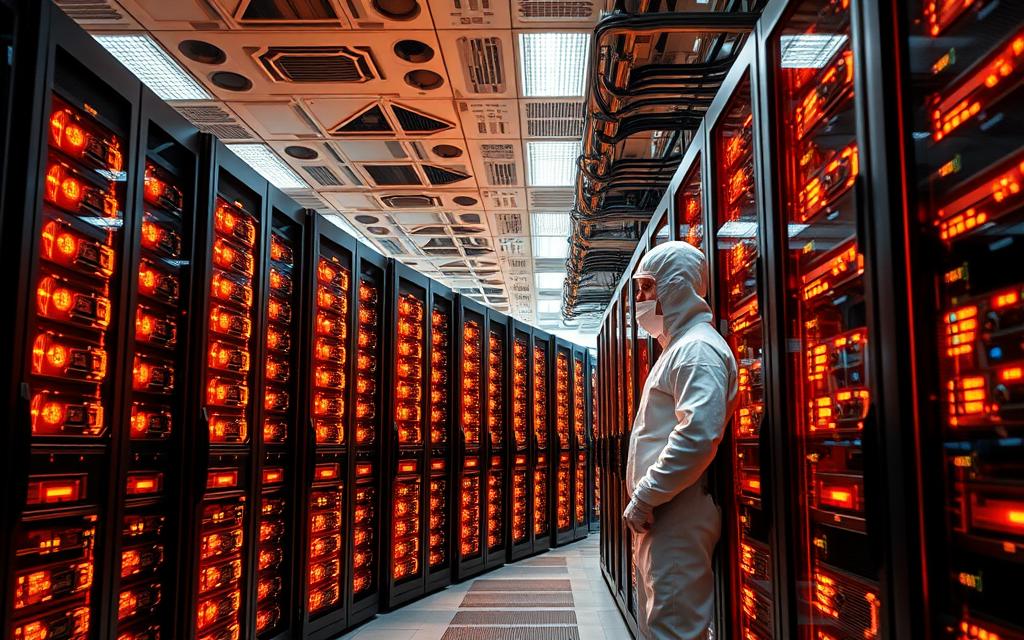
Traditional computers struggle in very hot places. They often stop working because they can’t cool down. This leads to lost data and expensive downtime.
In July 2022, Google and Oracle’s data centres in London shut down. The UK’s record heat overwhelmed their cooling systems. This showed we really need better solutions.
Heatwave technology is a new way to keep computers running in extreme heat. It uses special cooling and materials to work when others can’t. This is key for keeping services running in our hot world.
Heatwaves are happening more often. This makes extreme environment computing essential. It’s no longer just a nice-to-have, but a must-have for keeping things running smoothly.
Understanding High-Temperature Computing Challenges
Extreme heat is a big problem for electronic systems. Most standard computers can’t handle it. As temperatures go up, the way computing parts work changes. This affects how well they perform and how reliable they are.
The Limitations of Conventional Computing in Extreme Environments
Standard computers don’t do well in hot temperatures. Studies show that heat can change materials at a molecular level. This makes parts vibrate and expand, leading to stress and possible failure.
When computers are in the heat for a long time, they degrade faster. This means they need to be replaced often. But replacing them creates more heat and harm to the environment. This cycle of failure and replacement is expensive and harmful.
In 2022, Twitter’s data centre in California had a major problem during a heatwave. This shows that even advanced systems can fail in extreme heat. It also shows that traditional cooling systems can’t handle high temperatures well.
Related Posts:
- How Technology Affects Urbanization Smart Cities and…

- What Does Raytheon Technologies Make Defense and…

- Technologies Used in E-commerce Platforms and…

- What Is Bio-Related Technology Biotechnology and…

- What Can We Do With Technology Endless Possibilities

- What Is Sip and Puff Technology Assistive Device Control

Industrial Applications Demanding High-Temperature Resilience
Many industries face challenges because cooling is hard or impossible. They need computers that can work well without cooling. This is because traditional systems can’t handle the heat.
The table below shows some industries and their temperature challenges:
| Industry Sector | Typical Temperature Range | Primary Challenges | Cooling Limitations |
|---|---|---|---|
| Oil and Gas Exploration | 80°C to 200°C | Deep well monitoring | No external cooling possible |
| Aerospace Systems | -55°C to 125°C | Rapid temperature cycling | Weight and space restrictions |
| Automotive Manufacturing | 70°C to 150°C | Paint shop environments | Contamination concerns |
| Energy Production | 90°C to 180°C | Turbine monitoring | Explosion-proof requirements |
These industries need computers that can work well in harsh heat. The failure of standard systems to meet these needs has led to new technologies. These technologies can work without the need for cooling.
What Is Heatwave Technology
Heatwave technology is a new way to make computing systems work in very hot places. It’s different from old methods that can’t handle high temperatures. This new approach sees high temperatures as a chance to improve, not just a problem to solve.
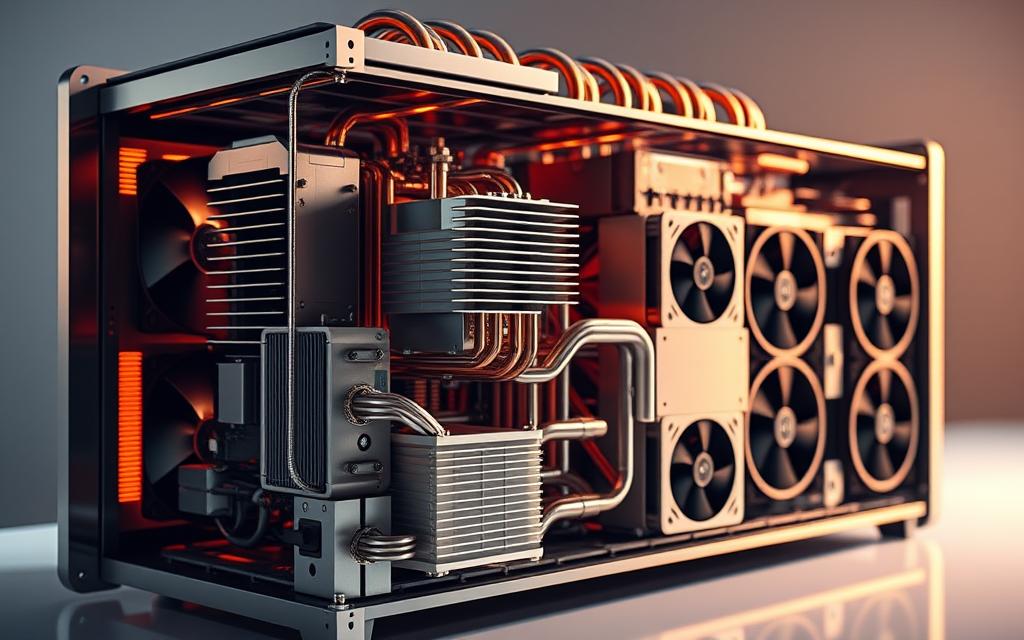
Core Principles and Operational Philosophy
The main idea behind heatwave technology principles is to manage heat actively, not just cool it down. Unlike old systems that see heat as something to get rid of, heatwave tech sees it as something to work with.
This new way lets computers keep working well, even when it’s very hot. It makes sure heat is thought about from the start, not just added later.
Thermal Management Innovations
New thermal management systems use smart cooling methods that are way better than just air. Liquid cooling can handle water up to 50°C, making cooling more efficient.
One cool method is to put whole servers in special oils. This method is great at getting rid of heat, keeping important parts cool. It’s a big step forward in keeping systems stable in very hot conditions.
Material Science Advancements
The growth of advanced computing materials has been key to heatwave tech’s success. New alloys and ceramics keep working well, even when it’s very hot.
These new materials help with heat transfer between parts. They let systems work well, even when it’s over 100°C. This is thanks to the science behind these materials.
Companies have made special substrates that are great at conducting heat. These work with new packaging to make systems that do well in hot places.
Key Components of Heatwave Technology Systems
Heatwave Technology systems are made up of special parts. They work together to keep computers running well, even when it’s very hot. These systems use advanced processors, cool solutions, and new materials.
These systems tackle the big problem of high heat in computing. They have three main parts. Each part is key to keeping the system working well.
High-Temperature Processors and Chipsets
At the heart of Heatwave Technology systems are special processors. They can work well even when it’s too hot for regular chips. These processors use new materials and designs to stay cool.
Manufacturers use many ways to make these processors heat-resistant:
- Wide-bandgap semiconductors that stay stable at high temperatures
- Reduced power density designs that make less heat
- Advanced packaging techniques that help cool better
These processors keep working fast and accurately, even when it’s over 100°C. This makes them perfect for places where it’s hard to cool things down.
Specialised Cooling Mechanisms
Even the most heat-resistant systems need to cool down to work best. Heatwave Technology uses cool systems that use less energy than old air conditioning.
Data centres can use up to 90% of their power for cooling during heatwaves. This shows how important good cooling is in hot environments.
Modern cooling systems use new ideas:
- Liquid immersion cooling that touches components with special fluids
- Phase-change cooling systems that use evaporation
- Direct-to-chip liquid cooling that targets heat sources
These systems cool better than old air conditioning. They use less energy and save money.
Thermal Interface Materials
The success of cooling systems depends on how well they transfer heat. Advanced thermal interface materials are key in this process.
These materials fill tiny gaps between components and coolers. They help move heat well. Modern materials can conduct heat better than old thermal pastes.
Key improvements in these materials include:
- Metal-based composites with better conductivity
- Graphene-infused compounds for top thermal performance
- Phase-change materials that fit component surfaces
These materials help heat move from processors to coolers. This keeps the system at a stable temperature.
| Component Type | Key Features | Temperature Range | Energy Efficiency |
|---|---|---|---|
| High-Temperature Processors | Wide-bandgap semiconductors, reduced power density | -40°C to 150°C | 15-20% better than conventional |
| Liquid Cooling Systems | Dielectric fluids, direct component contact | Operates up to 200°C | 40-50% energy reduction |
| Thermal Interface Materials | Graphene composites, phase-change adaptation | Stable to 300°C | Improves overall system efficiency by 25% |
| Complete Heatwave System | Integrated component design | -50°C to 200°C | 60% less cooling energy required |
The combination of these parts makes computing systems that work well in extreme heat. This approach is the future of computing in hot places.
Industrial Applications and Use Cases
Heatwave Technology changes how industries handle computing in hot places. It makes operations possible that were once too hard or not efficient. This tech is key in many sectors where old systems can’t handle the heat.
In Taiwan, for example, microchip makers had to cut back during heatwaves to save water. This shows how heat-resistant computing can help use less resources in hot times.
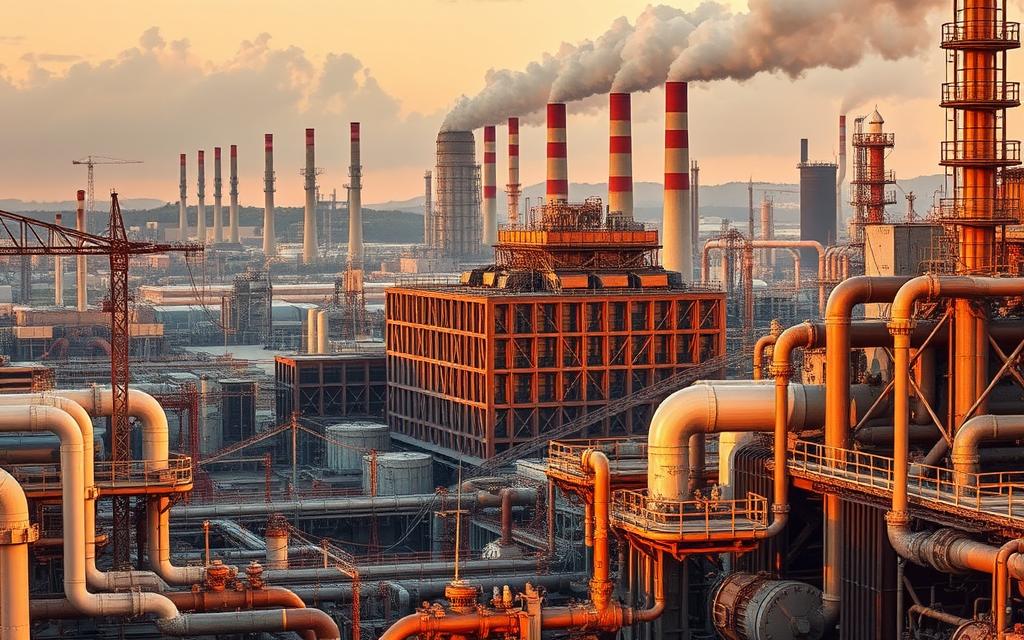
Oil and Gas Exploration
The oil and gas industry works in very hot conditions. Drilling can get so hot that normal computers can’t handle it. Heatwave Technology makes it possible to process data and monitor operations in these extreme temperatures.
It works without needing coolers, making things simpler and using less resources. This tech is vital for:
- Real-time seismic data analysis during exploration
- Continuous monitoring of extraction equipment performance
- Automated safety systems in high-temperature processing facilities
Aerospace and Defence Systems
Aerospace faces unique heat challenges, from rocket heat to re-entry temperatures. Heatwave Technology keeps computers working in these tough conditions. Defence systems also benefit, as they often work in places without cooling.
Key uses include:
- Avionics systems that work well in heat
- Satellite and spacecraft computing that withstands solar radiation and vacuum
- Battlefield communication systems in hot environments
Automotive Manufacturing
Car factories get very hot from welding, painting, and assembly. Heatwave Technology lets computers work right in these areas without needing lots of coolers. This makes process control and quality checks faster.
It also cuts down on energy for cooling and makes factory layouts more flexible. The tech supports advanced methods like robotic assembly and quality control in hot conditions.
Energy Production Facilities
Power plants, whether nuclear, fossil, or renewable, need heat-resistant computing. From turbine control rooms to solar farm systems, Heatwave Technology keeps things running smoothly. It ensures monitoring and control functions work well even when it’s very hot.
Energy facilities use it for:
- Grid management systems that work in heatwaves
- Power plant control systems near heat sources
- Renewable energy installations in hot, remote places
In these different fields, industrial computing applications show how Heatwave Technology is valuable. It makes operations possible in extreme heat, making it a key part of modern industrial setup.
Performance Metrics and Specifications
Heatwave Technology systems are top-notch when it comes to working in hot conditions. They keep going when normal computers can’t, even in very hot places.
Temperature Tolerance Ranges
These systems work well in extreme heat. Normal computers stop working at 85°C, but Heatwave keeps going up to 200°C.
The temperature tolerance specifications include:
- Continuous operation: -40°C to 200°C
- Peak temperature survival: 250°C for limited durations
- Thermal cycling endurance: 5,000+ cycles without degradation
Even a small rise in temperature can harm electronics. This shows how important it is to manage heat well in tough places.
Computational Performance at Elevated Temperatures
Heatwave Technology stands out because it keeps processing power up in the heat. It doesn’t slow down or stop working, even when it’s very hot.
Key performance metrics include:
- Processing speed maintenance: 99% at 150°C
- Memory bandwidth: Sustained throughput above 90% of maximum
- Data integrity: Error rates below 10⁻¹² at peak temperatures
They use smart clocking technology to keep performance high while controlling heat. This means tasks keep going without pause, even when it’s very hot.
Reliability and Longevity Metrics
Heatwave Technology systems are very reliable for industrial use. They last much longer than regular computers.
Critical longevity indicators include:
- Mean Time Between Failures (MTBF): 100,000+ hours at 150°C
- Annualised Failure Rate:
- Performance degradation:
Thanks to their advanced heat management and materials, these systems beat traditional computers by a lot in harsh conditions. This means less downtime and lower costs for important tasks.
Comparative Analysis: Heatwave vs Traditional Computing
Organisations dealing with high temperatures need to know the difference between heatwave systems and regular computers. This look at both performance and cost helps understand the best choice.
Operational Capabilities in Extreme Conditions
Regular computers work best between 0°C and 40°C. Outside this range, they slow down and can fail. Heatwave Technology, on the other hand, works well over 85°C, and some parts even above 120°C.
In hot environments, regular computers need cooling or shutdowns. Heatwave systems keep working, keeping operations running smoothly.
Heatwave Technology is more than just heat tolerance. It also seals against dust and moisture, and its parts are protected against corrosion. This means it lasts longer in tough environments where regular computers fail quickly.
Total Cost of Ownership Considerations
Heatwave Technology costs more upfront, but it’s cheaper in the long run. Regular computers in hot places have hidden costs:
- They need to be replaced often because of heat
- They require cooling systems and maintenance
- They cause downtime and lost production
- They can lose data and cost to recover it
Heatwave systems cut down on these costs. They last longer and need less upkeep, saving money over time.
A 2022 study in Sciences Advances said extreme heat cost the global economy up to $50 trillion from 1992 to 2013. This shows why heat-resistant tech is so important.
This study shows the huge financial hit from heat-related problems. Companies using Heatwave Technology stay reliable and avoid big losses as temperatures rise.
When calculating return on investment, consider both the cost of equipment and the value of continuous operation. For key sectors like energy, manufacturing, and aerospace, avoiding one shutdown can pay for the whole system.
Implementation Strategies for Businesses
Implementing Heatwave Technology needs careful planning. It must consider environmental factors and infrastructure. Companies should create detailed business implementation strategies. These should look at how things work, budget, and future growth.
Good planning helps adopt new tech smoothly. It also makes sure the investment pays off.
Assessment of Environmental Requirements
First, a detailed environmental check is key. Businesses need to measure temperature in all areas. They should find out where it gets hottest and how it changes with the seasons.
This helps figure out what temperature new systems can handle.
Another important step is thermal cycling analysis. It shows how temperature changes affect equipment. In 2022, the UK heatwave showed Redcentric how important this is.
Looking at more than just temperature is also vital. Humidity, dust, vibrations, and electromagnetic interference must be checked. This makes sure Heatwave Technology fits the specific needs of each place.

Integration with Existing Infrastructure
Getting new tech to work with old systems is hard. It’s about size, power, data connections, and how they talk to each other. Businesses must think about how new systems will work with old ones.
It’s best to move things in stages. This lets you test and improve at each step. It also helps train staff and make systems better.
It’s important for new tech to work well with what’s already there. Heatwave Technology should talk to monitoring systems, control platforms, and data management. This keeps everything running smoothly together.
Updating old systems needs careful thought about cooling and power. Adding special cooling and thermal materials can help. This makes systems better without having to replace everything.
Technical Specifications and Requirements
Setting up Heatwave Technology systems needs careful thought about several key technical points. These points affect how well the systems work and how well they fit in with other systems. Make infinite craft also becomes relevant when this topic is compared with nearby questions around heatwave high temperature. They are essential for making high-temperature computing work well in tough industrial settings.
Power Consumption and Efficiency
Heatwave Technology systems use a lot less energy than old computing setups. They manage heat well, which cuts down on the need for cooling systems.
These systems do great work while using less power. They use smart designs and power management to achieve this:
- Optimised processor architectures designed for high-temperature operation
- Intelligent power management that adjusts consumption based on thermal conditions
- Reduced cooling energy requirements through passive thermal management
- Efficient power delivery systems minimising conversion losses
The power consumption specifications are 30-50% lower than usual systems. This is really helpful in places where power is hard to get.
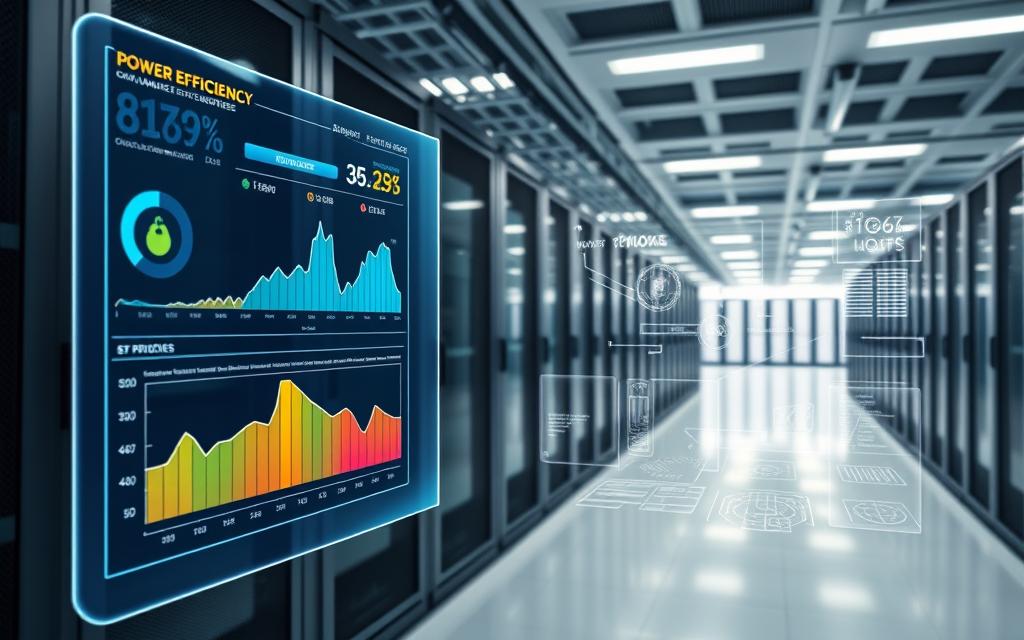
There are many energy efficiency metrics to look at. These include how much work the system does per kilowatt-hour, how well it handles heat, and the cost of running it. Looking at heatwave high temperature alongside intel vpro enhanced business gives a clearer view of the wider topic. These numbers help figure out the total cost of owning the system and its impact on the environment.
Physical Space and Installation Considerations
Putting Heatwave Technology systems in place needs careful thought about space and environment. Planning well ensures they work well and last long in tough conditions.
Important installation requirements include enough space for cooling, strong mounting surfaces, and thinking about the environment. These systems need 20-30% less space than old systems with cooling outside.
Teams installing these systems should think about these key points:
| Consideration | Standard Requirement | Special Conditions |
|---|---|---|
| Minimum Clearance | 15cm all sides | 25cm in confined spaces |
| Mounting Surface | Heat-resistant materials | Vibration dampening required |
| Ambient Temperature | Up to 80°C operational | Derating above 80°C |
| Power Connection | Standard industrial plugs | Explosion-proof variants available |
| Maintenance Access | Front access sufficient | Full perimeter access recommended |
The systems are designed to fit in small spaces but keep working well. This is great for places where space is very limited, like on ships or in planes.
Following the manufacturer’s instructions for installation is key. It helps the system work best and stay reliable. It also means less noise, making it better for people working nearby.
Industry Standards and Certifications
Heat-resilient computing solutions need to follow strict industry standards and certifications. Heatwave Technology systems meet these standards. They ensure reliability, safety, and care for the environment in extreme heat.
Compliance with International Standards
Heatwave Technology sticks to many international standards. They get certified by bodies like:
- International Electrotechnical Commission (IEC) standards for electrical safety
- International Organization for Standardization (ISO) quality management protocols
- Underwriters Laboratories (UL) certification for hazardous environments
- ATEX directives for equipment in explosive atmospheres
This approach to industry standards compliance makes systems work worldwide. Each part is tested to work in different temperatures and conditions.
Safety and Environmental Certifications
Safety is key in high-temperature computing. Heatwave Technology systems have many safety certifications. They cover:
- Thermal runaway prevention mechanisms
- Electrical isolation and grounding requirements
- Fire resistance and containment protocols
- Emergency shutdown procedures
Environmental certifications focus on sustainable use. They include energy efficiency, recycling, and disposal guidelines. The technology supports global efforts to fight extreme heat.
“Strengthening resilience through science and data represents a critical pathway for addressing extreme heat challenges through technological innovation.”
This shows how Heatwave Technology helps the environment while keeping operations top-notch. The safety environmental standards framework ensures responsible use in various industries.
Certification needs ongoing checks and updates. This ensures they meet the latest international certifications and tech advancements.
Future Developments and Technological Trends
High-temperature computing is evolving fast, driven by urgent needs in many areas. Innovation is key to making systems more heat-resistant. This helps cities, communities, and industries avoid system failures due to extreme heat.
Emerging Materials and Technologies
New material innovations are changing high-temperature computing. Advanced nanomaterials, like graphene and carbon nanotubes, are very promising. They conduct heat well and stay strong even in extreme conditions.
Phase-change materials (PCMs) are also getting a lot of attention. They can absorb and release heat during state changes. This makes them great for cooling systems, reducing the need for active cooling.
Quantum-inspired cooling technologies are another exciting area. They use quantum effects to cool systems more efficiently than before. This could change how we handle heat in computers.
Using these emerging materials technology solutions makes systems more heat-resistant and energy-efficient. This fits with other cooling technology advancements that meet growing power demands.
Market Growth Projections
The market for heat-resilient computing is growing fast. It’s expected to grow by more than 15% each year for the next decade. This growth is driven by several factors:
- More automation in extreme environments
- Stricter safety standards
- Cost savings from less cooling needed
- More data processing in remote areas
North America and Europe are leading in adopting these technologies. But Asia-Pacific is growing the fastest, mainly in manufacturing and energy.
These market growth projections show that heat resilience is both necessary and profitable. Companies that invest in these future computing trends will gain a big advantage.
The mix of material science, computing, and thermal management is driving innovation. As these technologies improve, we’ll see even more advanced solutions for high-temperature environments.
Case Studies: Successful Implementations
Industry leaders are seeing great results with high-temperature computing solutions. These examples show how Heatwave Technology boosts performance in tough environments. They highlight how these solutions improve performance and save money.
Major Oil Company Deployment
A top energy company had big problems in the desert. Their computers couldn’t handle the heat over 60°C. This led to frequent breakdowns and high maintenance costs.
They turned to Heatwave Technology. This changed their field operations for the better. The new systems worked well in the heat, giving them real-time data to make better decisions.
The results were clear:
- 85% less downtime
- 60% less maintenance costs
- Better data collection in hot weather
- More reliable monitoring for safety
This shows how special computing can beat environmental challenges in energy work.
Aerospace Manufacturer Integration
A big aerospace company needed computers that could handle high temperatures. Their test chambers got hotter than 80°C, beyond what regular computers could handle. They had to cool them down and stop tests often.
Heatwave Technology changed their testing. They put the new systems right in the test chambers. This meant no need for extra cooling and tests could run longer without stopping.
The benefits were big:
- Tests ran for 72 hours without stopping
- 40% less energy used in testing
- More accurate data from consistent systems
- Quicker product development
These examples show how Heatwave Technology makes aerospace testing better and more reliable.
New ways to manage heat are always being found. Microsoft tried an underwater data centre in 2020. It used seawater to cool the computers, showing other ways to handle heat.
These stories show Heatwave Technology is a real solution for extreme conditions. It keeps systems running, cuts down on maintenance, and makes them more reliable than usual computers.
Conclusion
Heatwave Technology is a big step forward in making computers more resilient. It helps them work well even when it’s very hot. This is important because extreme weather can break down regular systems.
Heatwaves cause a lot of deaths and harm many workers every year. This technology is key to keeping people safe and work going smoothly. It’s not just for factories; it helps everyone stay healthy and productive.
Companies like those in oil and gas and aerospace use it to keep things running smoothly. The future looks bright for Heatwave Technology. It will get even better at managing heat and will be used in more places.
As the world gets warmer, we need computers that can handle the heat. This technology is a smart choice for the future. It keeps things running smoothly and keeps us safe.
FAQ
What is Heatwave Technology?
Heatwave Technology is about making computers work well in very hot places. It uses new ways to manage heat and special materials. This helps computers keep working even when it’s very hot.
Why is high-temperature computing becoming more important?
As the world gets hotter, computers can’t handle the heat as well. In 2022, Google and Oracle’s London data centres failed during a heatwave. This shows we need computers that can handle the heat.
How does extreme heat affect conventional computing systems?
Extreme heat makes computers work less well and can damage them. It causes parts to vibrate and expand. This can lead to computers failing.
What industries benefit most from Heatwave Technology?
Oil and gas, aerospace, automotive, and energy production need Heatwave Technology. These places are often very hot and hard to cool.
How does Heatwave Technology manage heat differently from traditional systems?
Heatwave Technology manages heat proactively, not just when it gets hot. It uses liquid cooling, immersion cooling, and special materials. This keeps computers running smoothly even when it’s hot.
What are the key components of a Heatwave Technology system?
A Heatwave Technology system has special processors, cooling systems, and materials. These help keep the system cool and working well.
How does Heatwave Technology improve energy efficiency?
Heatwave Technology uses less energy because it doesn’t need as much cooling. This is good, as cooling systems use a lot of energy, even more in hot weather.
What temperature ranges can Heatwave Technology systems withstand?
Heatwave Technology systems can handle very high temperatures. They keep working well, even when it’s extremely hot.
How does Heatwave Technology compare economically to traditional computing?
Heatwave Technology costs more at first, but it saves money in the long run. It uses less energy, needs less maintenance, and lasts longer. This means less money lost due to computer failures.
What are the implementation considerations for businesses?
Businesses need to think about the environment and how to fit Heatwave Technology into their systems. They also need to make sure it works with what they already have.
Are there industry standards and certifications for Heatwave Technology?
Yes, Heatwave Technology meets international standards for safety and performance. It also supports global efforts to deal with extreme heat.
What future developments are expected in high-temperature computing?
New materials and cooling technologies are coming. These will make computers even better at handling heat. The market for these solutions is growing fast.
Can you provide examples of successful Heatwave Technology implementations?
Big oil companies use Heatwave Technology in tough drilling conditions. Aerospace uses it for testing. Even Microsoft has shown how it works underwater.
How does Heatwave Technology contribute to sustainability?
Heatwave Technology uses less energy and reduces the need for cooling. This makes computing greener and helps the environment.