

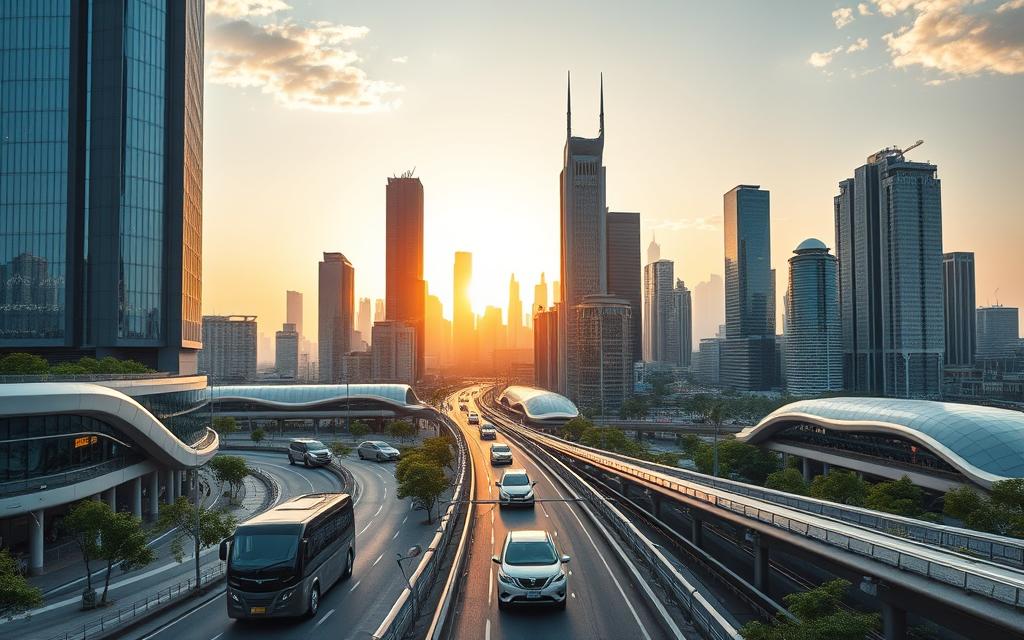
Urban areas around the world are changing fast, thanks to new technology. This change is not just about building new things. It’s about making cities smarter and more connected.
The idea of smart cities is changing how we plan and manage cities. These cities use data, IoT devices, and AI to work better and make life better for everyone.
This tech revolution is solving big city problems in new ways. It’s making cities run smoother and greener, from handling traffic to managing energy.
The future of cities is all about making them better for people. These advanced cities will mix digital smarts with real-life needs. They will be the next step in how we live together.
The Evolution of Urbanisation and Technological Integration
Urban development has changed a lot over time, thanks to technology. This journey shows how new tech has made our cities more complex. We’ve moved from simple systems to today’s digital ones.
Historical Urban Growth Patterns
The history of urbanisation shows cities growing faster, thanks to new tech. Early cities grew around natural resources and trade. New tech helped with basic needs like water and defence.
Pre-Industrial Revolution Urban Developments
Before the 18th century, cities were small and close together. The tech of that time included:
- Roman aqueducts and roads
- Medieval city walls
- Simple water and sanitation systems
These helped cities grow but didn’t let them get too big. This was because of tech limits in moving people and building.
20th Century Urban Expansion and Early Technologies
The industrial revolution cities changed urban growth. New manufacturing tech let cities grow fast. Key tech included:
Related Posts:
- What Can We Do With Technology Endless Possibilities

- How Many Students Have Access to Technology at Home…

- How Technology Is Changing Retail From E-commerce to AI

- What Is Sip and Puff Technology Assistive Device Control

- What Is Bio-Related Technology Biotechnology and…

- Technologies Used in E-commerce Platforms and…

- Electric lights and power
- Trains and trams
- Car roads and suburbs
This tech started modern urban sprawl. It made big cities that are now the base for smart cities.
The Digital Age and Urban Transformation
The late 20th century brought computing tech that changed city management. This started the digital transformation we see today in cities.
Internet and Connectivity as Catalysts
The 1990s and 2000s saw the internet change cities. It made cities more connected, enabling:
- Quick communication
- Digital city management
- Networked utilities
This connectedness helped cities become integrated networks.
Shift Towards Data-Driven Urban Planning
Today, cities use data to manage themselves. They use data-driven planning with:
- Sensors and IoT
- Predictive analytics
- Digital twin tech
This change is the biggest in city management, changing how cities work and grow.
From simple settlements to smart cities, tech has always played a key role. Each new tech era has built on the last, making cities better for people.
How Does Technology Affect Urbanisation: Key Drivers
Digital infrastructure is key to building and running smart cities. It makes cities more efficient, responsive, and sustainable. This helps cities grow and meet changing needs.
Digital Infrastructure as a Foundation
Modern cities need strong digital frameworks. This infrastructure supports their connected ecosystems. It enables data exchange and makes cities smarter and more efficient.
Broadband Networks and 5G Implementation
The introduction of 5G urban networks is a big step forward. These networks offer fast data transmission between devices and systems.
5G supports a lot of IoT devices with little delay. It makes things like self-driving cars and remote healthcare possible.
Cloud Computing and Urban Data Management
Cloud computing cities use remote servers for data. This approach is scalable and meets city needs.
Cloud platforms help cities manage data from different departments. This improves decision-making and resource use.

The table below shows how digital infrastructure helps cities become smarter:
| Infrastructure Component | Primary Function | Key Benefits | Implementation Challenges |
|---|---|---|---|
| 5G Networks | High-speed connectivity | Ultra-low latency, massive device support | Infrastructure density, spectrum allocation |
| Fibre Optic Broadband | Fixed high-speed internet | Reliable backbone connectivity | Digging permits, installation costs |
| Cloud Computing Platforms | Data processing and storage | Scalability, cost efficiency | Data security, vendor lock-in |
| Edge Computing Nodes | Local data processing | Reduced latency, bandwidth conservation | Physical security, maintenance access |
Automation and Efficiency in Urban Systems
Automation urban systems change how cities manage resources. These technologies make routine tasks more accurate and efficient.
Smart Transportation and Traffic Management
Intelligent transportation systems are a key part of urban tech. They use sensors and algorithms to improve traffic flow.
Adaptive traffic signals adjust based on traffic. This can cut travel times by up to 25% and reduce emissions.
Energy Grid Modernisation and Sustainability
Smart grids upgrade urban energy systems. They use digital tech to manage energy use in real-time.
Advanced meters give real-time energy data. This helps utilities and consumers make better energy choices.
Grid automation supports more renewable energy. It balances energy supply and demand, keeping the grid stable.
Core Components of Smart Cities
Modern cities rely on systems that gather, analyse, and act on data. These systems make cities more efficient and responsive. They help cities serve their people better and use resources wisely.
Internet of Things (IoT) in Urban Environments
IoT networks are the heart of smart cities. They connect physical objects to digital systems. This lets cities collect data in real-time from all over.
Smart Sensors for Real-Time Monitoring
IoT sensors in cities track air quality and traffic. They send data that helps city managers make smart choices.
Traffic sensors adjust lights to cut down on jams. Pollution sensors alert when levels get too high. This makes a digital copy of the city that’s always up to date.
Smart waste systems use sensors to plan collection routes. This saves fuel and cuts costs while keeping cities clean.
Leak detection sensors in water systems find problems early. Smart grids manage energy use in real-time. This prevents power outages and boosts efficiency.
Artificial Intelligence and Urban Analytics
IoT gives the data, but AI turns it into useful insights. AI urban analytics help cities act before problems arise.
AI for Predictive Maintenance in Infrastructure
Machine learning predicts when things might break. This way, cities can fix problems before they happen.
Bridges and roads use AI to check their health. Utility systems use AI to plan repairs when it’s quiet. This keeps things running smoothly.
Machine Learning in Public Service Optimisation
AI looks at how people use public services. It helps plan better. Emergency services use AI to get to places faster.
Public transport adjusts to how many people are using it. AI helps it learn and get better over time.
| Technology | Primary Function | Key Benefits | Implementation Examples |
|---|---|---|---|
| IoT Sensors | Data Collection | Real-time monitoring | Smart parking, environmental monitoring |
| AI Analytics | Pattern Recognition | Predictive capabilities | Traffic prediction, service optimisation |
| Machine Learning | Continuous Improvement | Adaptive systems | Dynamic pricing, resource allocation |
| Predictive Maintenance | Infrastructure Management | Cost reduction | Utility networks, public facilities |
These technologies work together to make cities smarter. They help cities adapt to changes. This is what makes a city truly smart.
Technological Impact on Urban Infrastructure
Modern cities are changing fast, thanks to digital innovations. These changes make them more efficient and sustainable. We’ll look at how technology is changing two key areas: transportation and utility systems.
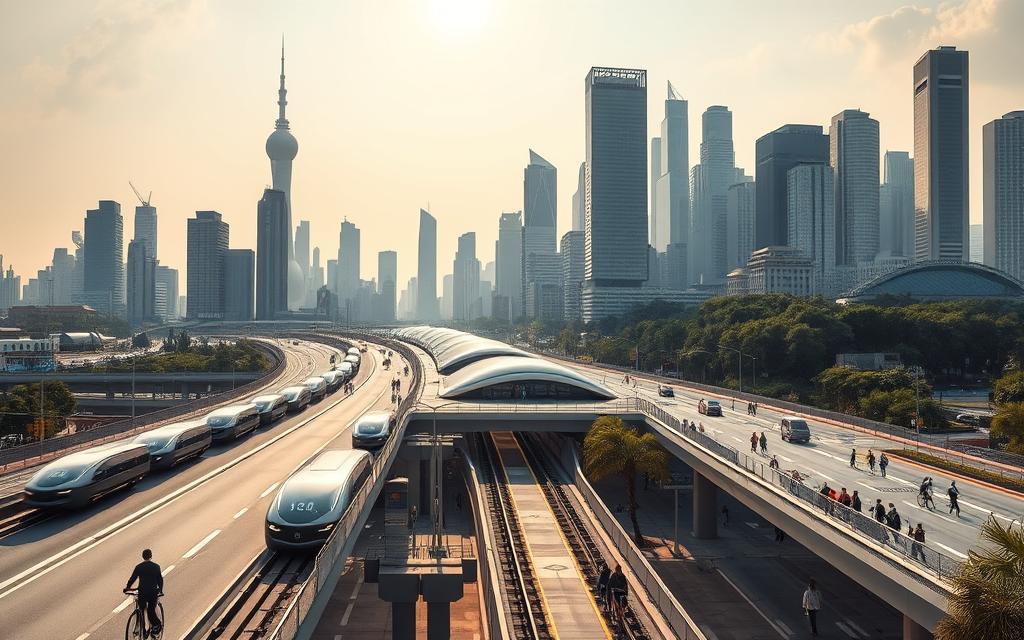
Transportation Systems and Mobility Solutions
Technology is making a big difference in how cities move people. New systems are making travel smoother and greener.
Intelligent Traffic Signals and Congestion Reduction
Smart sensors and cameras watch traffic in real-time. They adjust traffic lights to cut down on delays. This means less waiting for everyone.
These systems also use smart algorithms to predict traffic jams. This helps avoid congestion and makes travel better for all.
Electric Vehicle Charging Networks and Incentives
More EV charging spots are popping up in cities. This makes it easier for people to switch to electric cars.
There are also perks to encourage people to go electric. These include:
- Preferred parking for electric vehicles
- Lower charging rates at off-peak times
- Tax breaks for EV owners
These incentives make electric cars more appealing. They also help the environment.
Energy and Utility Management
Technology is also changing how cities handle energy and water. Smart systems make sure we get what we need without wasting it.
Energy and Utility Management
Modern electrical grids use digital tech to manage energy better. They work with renewable sources like solar and wind.
Smart grids improve energy use in several ways:
- They watch how much energy we use in real-time
- They balance energy supply and demand
- They can predict and prevent problems
This smart management cuts down on waste and makes the system more reliable.
Water Management Systems with Leak Detection
Advanced sensors are changing how cities manage water. They keep an eye on the pipes and spot problems fast.
Smart water management includes:
- Acoustic sensors that find leaks
- Monitoring the pressure in the pipes
- Automated valves to fix damaged sections
Spotting leaks early saves water and reduces damage. It’s a big win for cities.
| Infrastructure Type | Technology Implementation | Key Benefits | Implementation Challenges |
|---|---|---|---|
| Transportation Networks | Intelligent traffic systems, EV charging stations | Reduced congestion, lower emissions | High initial investment, system integration |
| Energy Grids | Smart meters, renewable integration systems | Improved efficiency, sustainability | Cybersecurity concerns, regulatory compliance |
| Water Systems | Leak detection sensors, automated valves | Resource conservation, cost reduction | Sensor maintenance, data management |
Data-Driven Urban Planning and Governance
Modern cities are using data to change how they plan and govern. This change helps make better decisions and builds trust between cities and their people.
Geographic Information Systems (GIS) and Mapping
Geographic Information Systems have changed how cities look at data. These tools help planners show complex data in easy-to-understand maps and 3D models.
GIS for Zoning and Land Use Planning
Cities use GIS to make better zoning choices. Planners combine data on people, environment, and infrastructure to find the best land use.
This method helps cities plan better spaces for homes, businesses, and nature. GIS urban planning tools make complex ideas easy for everyone to see.
Real-Time Data in Emergency Response Coordination
Emergency teams use GIS maps to work better in crises. They can see where incidents are, what resources are available, and the best routes to take.
In natural disasters, these systems show the best evacuation paths and where people might need help. This tech makes emergencies less scary and more manageable.
Citizen Engagement through Digital Platforms
Digital changes have opened doors for people to help shape their cities. Cities use online tools to get feedback and ideas from residents.
E-Government Services and Accessibility
Today’s e-government services make it easy for people to access city services. Online, you can do things like apply for permits and see public records from anywhere.
These services make life easier and help cities work better. They also help people who can’t get around easily or live far away.
Participatory Budgeting and Feedback Mechanisms
Many cities use digital citizen participation platforms for budgeting. People can suggest projects, vote on them, and see how money is spent.
These platforms make city decisions clearer and build trust. Digital feedback systems help cities hear what people think about new projects.
Online and mobile apps let people keep sharing ideas. This way, city services can better meet what the community wants.
Economic Implications of Technological Urbanisation
Advanced technologies in cities bring big changes to the economy. These changes affect jobs, where people invest, and who can access the economy. It’s important to study and plan these changes carefully.
Job Market Shifts and Skill Requirements
Technology in cities brings both chances and challenges for jobs. As cities get smarter, they need new skills. But, some old jobs might disappear.
Growth in Tech Sectors and Urban Employment
Technology makes new jobs in cities. Jobs in data, IoT, and urban informatics are just a few examples.
When tech companies move to cities, they create jobs. These jobs attract other businesses. This helps the local economy grow.
Studies show smart cities can bring a lot of economic value. One study found:
“Smart cities can create a lot of economic value. This comes from being more efficient, starting new businesses, and improving productivity in many areas.”
Addressing Digital Divides and Inequality
Technology can make social and economic gaps worse if not managed well. The digital divide is a big challenge.
Urban planners need to make sure everyone benefits from technology. This means digital literacy programs, making technology affordable, and fair policies.
If we don’t tackle these issues, social gaps can get bigger. People who are left behind need help and fair access to resources.
Investment in Smart City Initiatives
Financing smart city projects needs a lot of money and creative ways to fund them. Cities around the world are looking at different models.
Public-Private Partnerships for Funding
Public-private partnerships are key for smart city projects. They use private money and know-how while keeping public control.
Good partnerships have clear roles, share risks, and goals. They help cities use new tech without spending too much.
The table below shows different partnership models and what they do:
| Partnership Model | Private Sector Role | Public Sector Role | Typical Applications |
|---|---|---|---|
| Design-Build-Operate | Full project lifecycle | Regulation & oversight | Transport systems |
| Service Concession | Service provision | Infrastructure ownership | Utility management |
| Revenue Sharing | Investment & operation | Revenue participation | Digital platforms |
| Performance-Based | Service delivery | Payment upon results | Public services |
Cost-Benefit Analysis of Infrastructure Upgrades
It’s vital to check the costs and benefits of smart city projects. We need to look at both the obvious and hidden advantages.
When we evaluate, we consider things like:
- Direct financial gains and how long it takes to get them back
- Improvements in quality of life and social benefits
- Environmental benefits and sustainability
- Costs for upkeep and running the new systems
This helps cities choose the best projects. It also makes it clear to everyone why they’re spending money on these projects.
Doing these analyses right means smart city upgrades help the economy grow. They don’t burden future generations with debt.
Environmental Sustainability and Green Technology
Urban centres worldwide are embracing innovative approaches to address environmental challenges. Technology serves as a powerful ally in creating more sustainable cities that prioritise ecological balance alongside urban development.

Reducing Carbon Footprints with Smart Solutions
Modern cities implement advanced systems to significantly lower their environmental impact. These solutions target energy consumption, resource management, and daily operations that contribute to urban emissions.
Energy-Efficient Buildings and Smart Lighting
Smart public lighting systems represent a breakthrough in urban energy management. These adaptive networks adjust brightness based on real-time conditions, dramatically reducing energy consumption during off-peak hours.
Building management systems now incorporate AI-driven climate control and occupancy sensors. This technology ensures optimal energy use while maintaining comfort levels for occupants.
Urban Agriculture and Waste Reduction Technologies
Vertical farming and hydroponic systems transform urban spaces into food production centres. These innovations reduce transportation needs and associated emissions while providing fresh produce.
Optimised waste collection through sensor-equipped bins and route planning algorithms minimises fuel usage. Advanced recycling facilities and waste-to-energy conversion further contribute to carbon footprint reduction efforts.
Monitoring and Mitigating Pollution
Continuous environmental assessment forms the foundation of effective pollution control strategies. Real-time data collection enables proactive responses to emerging environmental concerns.
Air Quality Sensors and Data Transparency
Networks of air quality sensors provide pollution monitoring across urban areas. This data becomes publicly accessible through digital platforms, empowering citizens and policymakers alike.
Transparent environmental reporting drives accountability and informed decision-making. Cities can implement targeted interventions based on precise, location-specific pollution data.
Noise Pollution Control through Adaptive Systems
Smart sound monitoring systems identify noise hotspots in real time. These systems trigger adaptive responses such as traffic flow adjustments or infrastructure modifications.
Acoustic barriers and noise-absorbing materials integrated into urban design further mitigate sound pollution. These approaches create quieter, more pleasant living environments while addressing health concerns associated with excessive noise.
The integration of these technologies demonstrates how green technology cities can achieve substantial environmental improvements while maintaining urban functionality and quality of life.
Social and Cultural Impacts on Urban Dwellers
Smart cities change how we live and interact. They bring new ways of living, learning, and connecting. These changes offer great benefits but also bring big challenges.

Quality of Life Enhancements
Smart city tech improves life in cities. It makes services better and cities more accessible. The biggest gains are in healthcare and education.
Healthcare Access through Telemedicine and IoT
Telemedicine urban health changes how we get medical care. It cuts down on hospital visits and boosts preventive care. IoT devices help track health continuously, catching problems early.
The table below shows how tech changes healthcare access:
| Traditional Healthcare | Smart City Healthcare | Impact on Urban Dwellers |
|---|---|---|
| Scheduled in-person visits | On-demand virtual consultations | Reduced travel time and waiting periods |
| Reactive treatment | Preventive monitoring through wearables | Early detection of health issues |
| Centralised medical records | Integrated health data systems | Coordinated care across providers |
Smart Education Systems and Digital Literacy
Technology changes urban education. Digital platforms make learning fun and accessible anywhere. This helps students in all areas of the city get the same quality education.
Digital literacy programmes help everyone use the digital city. They teach basic to advanced skills. Workshops in community centres help bridge the digital gap.
Privacy and Security Concerns in Connected Cities
Technology makes cities better but raises privacy and security issues. The connection that makes cities smart also creates risks. Strong laws and tech are needed to protect against threats.
“This change is not without challenges. The big data collection raises serious privacy questions.”
Data Protection Regulations and Ethical Considerations
Strong data privacy regulations are key to smart cities. Laws control how data is used. Ethical rules ensure surveillance helps the public without harming individual rights.
Cities must balance data use with personal freedom. Clear consent and data use transparency build trust. Regular checks ensure privacy laws are followed.
Cybersecurity Measures for Critical Infrastructure
Keeping cities safe from cyber threats needs strong security. Cities use many defences, including:
- Real-time network monitoring for odd activity
- Regular security updates for devices
- Training on spotting phishing
- Plans for dealing with breaches
As one source says: “One of the main worries… is ‘the privacy and security’ of users’ data.” This shows the need for ongoing investment in cybersecurity to keep up with threats.
Case Studies: Successful Smart City Implementations
Looking at real examples shows how tech changes cities. Two cities are great examples of smart city success. They use technology in different ways.
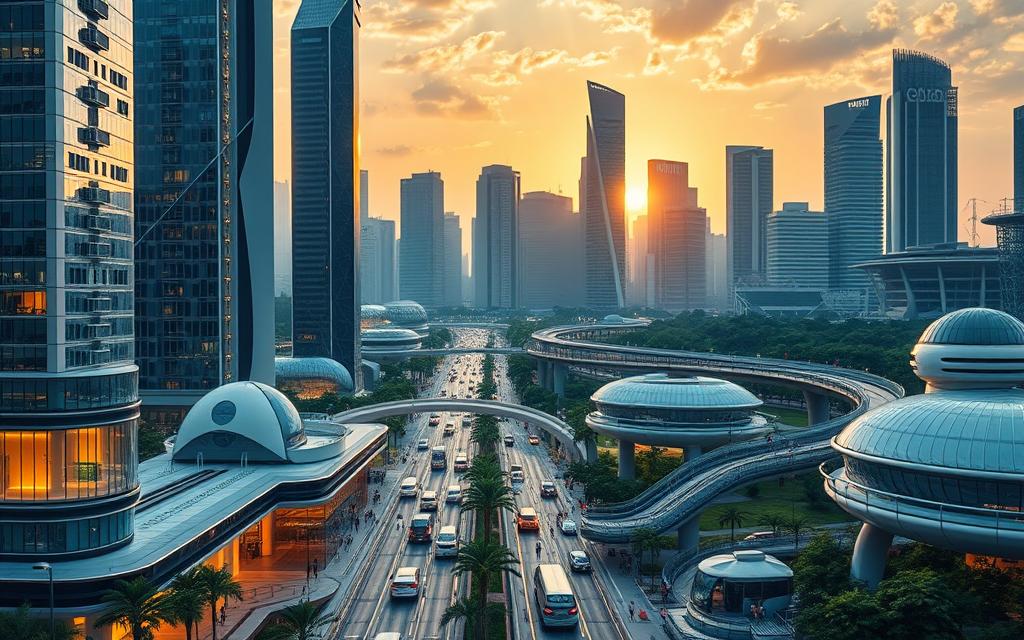
Singapore’s Smart Nation Initiative
Singapore leads in using tech in cities. It tackles city life with digital solutions. This approach covers many areas of urban living.
Integrated Transport and Housing Solutions
Singapore’s transport uses data to improve traffic and buses. It links housing with transport, making moving around easy.
Smart homes in Singapore use less energy and water. This shows how planning can make cities better.
Lessons Learned and Replicable Strategies
Singapore’s success comes from good government and partnerships. Its careful planning offers lessons for other cities.
Key strategies include adding tech step by step and listening to citizens. These steps help cities adopt smart tech well.
Barcelona’s IoT Integration and Urban Innovation
Barcelona leads in using IoT to solve city problems. Its focus on innovation has greatly improved public services.
Smart Lighting and Waste Management Successes
Barcelona’s smart lights adjust to people around. This cuts energy use by 30% without losing safety.
The city’s smart waste system uses sensors for better collection. This saves money and keeps streets clean.
Community Engagement and Equity Focus
Barcelona makes sure tech helps everyone. It uses digital platforms to hear from citizens on city plans.
The city ensures tech is fair for all. This makes Barcelona’s smart city efforts last.
| City | Key Strengths | Implementation Focus | Community Impact |
|---|---|---|---|
| Singapore | Integrated systems, government leadership | Transport-housing coordination | Efficiency and connectivity |
| Barcelona | IoT innovation, citizen engagement | Public services and sustainability | Equity and participation |
| Common Success Factors | Phased implementation | Public-private partnerships | Continuous improvement |
Both cities show that smart cities need tech and people’s needs. Their stories help other cities on their digital journey.
Challenges and Barriers to Adoption
Smart city technologies have great promise, but they face big hurdles. Cities must deal with complex tech and public worries to adopt them well.
Technical and Infrastructural Hurdles
Updating urban infrastructure is a big task. It needs careful planning and a lot of money. Many cities have old systems that can’t handle new tech.
Legacy System Integration and Compatibility Issues
Most cities have old infrastructure. These systems can’t handle the data needs of smart cities. Fixing them is hard and expensive.
The cost of legacy system integration is high. Cities must choose between modernising and keeping costs low.
Scalability and Interoperability of Technologies
Smart city solutions need to work across different areas. Achieving technology interoperability is hard. Without standards, systems can’t share data.
Scaling up projects is also a challenge. Small tests might work, but big rollouts can fail. Cities must plan for growth from the start.
Regulatory and Political Considerations
Cities also face regulatory hurdles and need political support. These are key for success.
Policy Frameworks for Standardisation
Good smart city policy needs cooperation from all levels of government and private sectors. Clear rules on data and tech are essential. Without them, projects may face legal issues or public backlash.
Creating standards for system communication is important. But, it takes time and global effort.
Public Resistance and Acceptance Factors
People worry about privacy, surveillance, and tech reliability. They fear job loss due to automation. Some feel too dependent on digital systems.
Building trust requires open communication and showing benefits. Cities should involve people in planning and address their concerns. Successful projects improve life and protect rights.
Future Trends in Urban Technology
Looking ahead, technology is changing cities in big ways. The next few decades will see huge changes in how we live and work in cities.
Emerging Technologies on the Horizon
New technologies are set to change cities. They promise to make cities more efficient, smart, and better for everyone.
Autonomous Vehicles and Urban Mobility Futures
Autonomous vehicles urban systems are a big deal. Self-driving cars and buses could cut down traffic and make roads safer.
These cars talk to smart roads, finding the best routes. This means less traffic and faster travel for all.
Blockchain for Transparent Governance and Transactions
Blockchain governance is a new tool for cities. It makes sure public records are safe and clear.
It lets people see how cities work. Blockchain also makes things like buying property and paying bills easier with smart contracts.
Long-Term Vision for Sustainable Urbanisation
Cities need plans for growing in a green way. This means thinking ahead and working together with other cities.
Global Collaborations and Knowledge Sharing
Cities around the world are teaming up. They share ideas and solutions to big problems.
This helps cities learn from each other. It speeds up the use of good ideas and policies.
Preparing for Climate Resilience and Adaptation
Making cities ready for climate change is key. They need strong systems to handle environmental changes.
Technology is key in watching for climate dangers and planning responses. Smart sensors and AI help predict weather and rising waters.
Planners are adding green spaces and clean energy. This makes cities better for the future.
“The future of urban tech is full of possibilities. With the right planning, cities can be better for everyone.”
This shows the bright future of city tech. With smart planning and teamwork, cities can improve life for all their people.
Conclusion
Technology is changing cities, making them more efficient and sustainable. This summary shows how digital tools are changing infrastructure, governance, and daily life.
Smart cities bring many benefits, like better resource use and a higher quality of life. But, we must also address challenges like data privacy and ensuring everyone is treated fairly.
Creating smart cities requires teamwork. Governments, businesses, and citizens must work together. We need to innovate while keeping ethics and fairness in mind.
As technology advances, cities will keep evolving. Our aim is to build cities that are smart, humane, and strong for everyone.
FAQ
What defines a smart city?
A smart city uses technology like the Internet of Things (IoT) and artificial intelligence (AI) to improve life. It has digital systems that work together for better transport, energy, and more. Questions about affects urbanization smart also connect with make infinite craft when readers compare closely related topics. This makes cities more efficient and sustainable.
How has technology historically influenced urban development?
Technology has changed cities a lot. First, there was organic growth, then the Industrial Revolution brought big changes. The Digital Age brought even more, with the internet helping cities plan better and become smart.
What role does digital infrastructure play in smart cities?
For smart cities, digital infrastructure is key. It’s like the city’s nervous system. It helps data flow fast, supports big data, and lets IoT and AI work well. This makes cities more efficient and quick to respond.
How do IoT and AI contribute to urban management?
IoT uses sensors to collect data on things like traffic and waste. AI then uses this data to predict and plan better. This helps cities manage things more effectively.
In what ways does technology improve urban transportation and energy systems?
Technology makes transport smarter by managing traffic better and supporting electric cars. It also makes energy systems more efficient by using renewables and smart grids. This makes cities more sustainable.
How does data-driven governance benefit cities and citizens?
Data-driven governance helps cities plan better and respond to emergencies. It also makes it easier for citizens to get involved and have a say. This makes public services better and more open.
What are the economic impacts of developing smart cities?
Smart cities create jobs in the tech sector but also highlight the need for digital skills. They often use Public-Private Partnerships (PPPs) for funding. Projects are checked to make sure they’re worth it, like in Singapore and Barcelona.
How do smart cities promote environmental sustainability?
Smart cities use technology to cut down on waste and pollution. They have energy-saving buildings and smart waste systems. They also monitor air and noise pollution to keep the environment clean.
What social and cultural changes do smart cities introduce?
Smart cities offer better healthcare and education through technology. But, they also raise privacy and security concerns. It’s important to have strong rules to protect citizens and their data.
Can you provide examples of successful smart city implementations?
Singapore’s Smart Nation is a great example of smart transport and housing. Barcelona leads in IoT, like smart lighting and waste management. Both cities focus on people and technology working together.
What challenges do cities face in adopting smart technologies?
Integrating new tech with old systems is hard. Cities need to make sure everything works together well. They also need to win over the public and plan carefully to succeed.
What future technologies are expected to shape urban environments?
Future tech like self-driving cars and blockchain will change cities. Cities aim to be ready for these changes, focusing on working together and being sustainable.
How does technology address equity and inclusion in urban settings?
Technology can help make cities more inclusive. But, it can also widen the digital gap. It’s important to make sure everyone has access to these benefits.
What measures are in place to protect data privacy in smart cities?
Data privacy in smart cities is taken seriously. There are strict rules, encryption, and clear policies. Cybersecurity is key to keeping information safe, with regular checks and public oversight.