



In today’s world, having digital tools at home is key for students to do well. The digital divide is a big problem for schools today.
Even though 97% of young people had home technology access in 2021, there are big gaps. These gaps mean some students don’t get the same chance to learn. This can hurt their grades for a long time.
The quality of student internet access changes a lot from one place to another. It’s not just about having internet. It’s also about having good devices, knowing how to use them, and having help when you need it.
It’s very important to know how big the digital divide really is. This knowledge helps us find ways to fix it. Let’s dive deeper into this important issue.
Defining the Digital Divide in American Education
The digital divide is a big problem in American schools today. It divides students into two groups: those with lots of tech and those with little to none. This makes a big difference in how well students can learn.
What Constitutes the Digital Divide
The digital divide is about not having equal tech access. It’s not just about having a computer or tablet. Many students don’t have the right tools for learning.
Having internet is also key. But, not everyone has fast and reliable internet at home. This is called the “homework gap.”
Knowing how to use tech is just as important. Without the skills, having tech is not enough. Training and support vary a lot between places.
These access disparities affect how students learn. They decide who can use digital tools and who can’t. This shapes their educational journey.
Related Posts:
- How Technology Affects Urbanization Smart Cities and…

- What Can We Do With Technology Endless Possibilities

- What Is Sip and Puff Technology Assistive Device Control

- How Technology Is Changing Retail From E-commerce to AI

- What Is Bio-Related Technology Biotechnology and…

- What Is Heatwave Technology High-Temperature…

Historical Context of Technology Access in Education
Technology in schools has changed a lot over the years. In the 1980s, schools first started using computers. But, students could only use them during set times.
In the 1990s, more schools got internet. But, not many homes did. This showed how some groups had less access than others.
The 2000s brought a new idea: giving each student their own computer. But, how well this worked varied a lot depending on the school’s budget.
Looking back, we see that tech access has always been uneven. Knowing this helps us understand why the digital divide is hard to fix.
Even though things have gotten a bit better, big gaps remain. From 2016 to 2021, more students got access. But, rural and poor areas are far behind in tech compared to richer and urban areas.
Current Statistics: How Many Students Have Access to Technology at Home
Recent data shows how many students have technology at home in the United States. The numbers look good at first, but there are big gaps that need fixing.
National Averages and Overall Access Rates
In 2021, 97% of kids aged 3-18 had internet at home, surveys found. This is a big step forward from before.
But, the quality of this access varies a lot. Some families deal with slow or unreliable internet. Others have old computers.
How well parents are educated also affects their kids’ tech access. Families with more educated parents tend to have better tech.
Demographic Breakdowns of Technology Access
Technology access changes a lot depending on who you are. These differences show big challenges in making education fair for all.
Income-Based Disparities in Access
How much money a family makes is a big factor in tech access. Kids from poorer families find it hard to get online.
Only 94% of the poorest kids have internet at home. But, 99% of the richest kids do. This means poorer kids get a bad start in learning.
Racial and Ethnic Disparities in Technology Access
There are big racial disparities in who has tech at home. These gaps show deep problems in society.
Native American kids have the lowest access at 89%. Asian kids have the most at 99%. White kids are close behind at 98%. Black and Hispanic kids have rates between 94-96%.
Geographic Variations: Urban vs Rural Access
The urban rural divide also affects tech access. Rural areas often have slower internet and less access.
It’s hard to get good internet in rural areas because of limited services. Students there often can’t use fast internet for learning.
These differences make it even harder for students who already face big challenges in school.
Types of Technology Access: Beyond Basic Internet Connection
Internet access is key, but it’s not the only thing that matters. The quality and type of technology students use can greatly affect their learning. This difference can change how much they learn.
Device Availability and Quality Differences
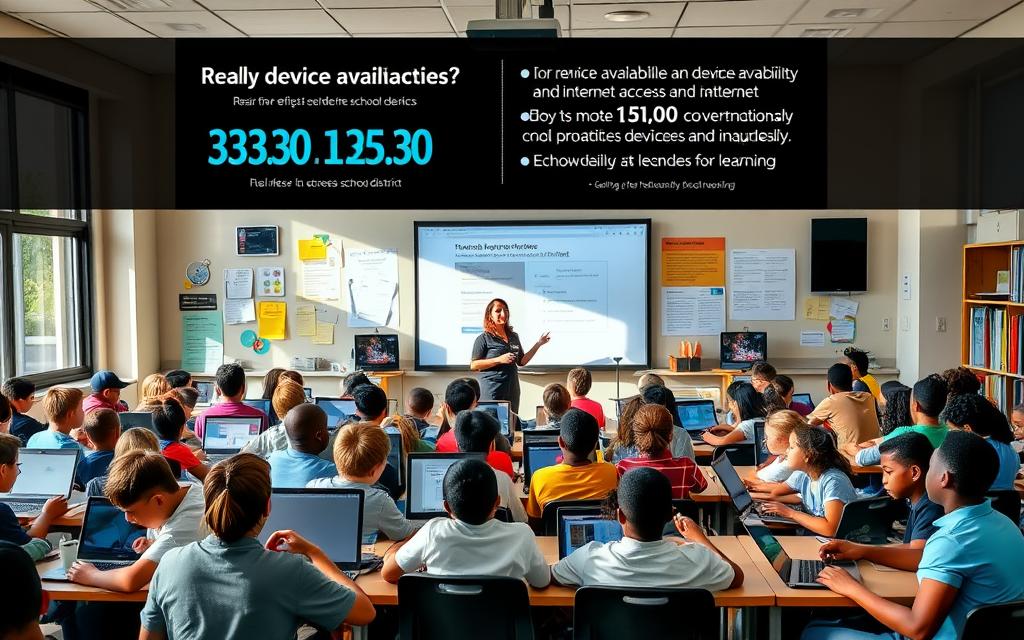
In 2021, a study showed that 93% of students had a computer for school. But, 4% only used smartphones. This shows a big difference in how students learn.
Using a smartphone for school is hard. They can’t do big projects or use interactive tools well. The size and power of devices matter a lot for learning.
Old computers can also be a problem. They might not work with new school programs. This can slow down learning and cause frustration.
Broadband Speed and Reliability Variations
Internet speeds vary a lot, causing a “bandwidth divide.” Some families have fast internet, while others don’t. This affects online learning a lot.
For good online learning, you need:
- Download speeds of at least 25 Mbps
- Fast upload speeds for videos
- Low latency for live chats
- Stable internet without drops
Many places, like rural areas, don’t have good internet. This makes learning hard, even during busy times.
Access to Educational Software and Digital Resources
Access to special educational software and digital resources is also important. Many schools use expensive programs that not everyone can use.
Barriers to software access include:
- Costs for subscriptions
- Device needs
- Help for setting up and fixing
- Knowing how to use it
Students often miss out on tools for STEM and digital arts. These tools are key for learning in these areas.
The table below shows how different tech setups affect learning:
| Technology Configuration | Typical Download Speed | Primary Device Type | Software Access Level | Educational Impact |
|---|---|---|---|---|
| Optimal Setup | 100+ Mbps | New computer/tablet | Full premium access | Seamless interactive learning |
| Standard Setup | 25-100 Mbps | Functional computer | Basic educational software | Adequate for most tasks |
| Limited Setup | 5-25 Mbps | Smartphone only | Free applications only | Restricted functionality |
| Inadequate Setup | <5 Mbps | Shared outdated device | Minimal software access | Frequent learning interruptions |
Understanding technology access shows that just having internet isn’t enough. The quality of devices, internet speed, and software access all play a big role. They can make a big difference in how well students learn.
The Impact of COVID-19 on Home Technology Access
The COVID-19 pandemic changed how we use technology in schools. It showed big gaps in what students have at home. Schools had to move online, but many students didn’t have the right tools.
Emergency Remote Learning and Its Challenges
When schools went online, many students faced big problems. Families without good internet or devices found it hard to join classes. This showed how different homes are in terms of technology.
Students from poorer homes had the biggest struggles. They often had to share devices, which meant less time for learning. This made learning hard during important times.
Studies show that having the right tech is key to learning during lockdowns. Students with good access learned more. Those without learned less.
The table below shows how tech access affected learning during school closures:
| Student Group | Average Daily Learning Hours | Device Access Rate | Internet Reliability |
|---|---|---|---|
| High-income households | 5.2 hours | 98% | 96% reliable |
| Middle-income households | 4.1 hours | 91% | 88% reliable |
| Low-income households | 2.8 hours | 76% | 67% reliable |
There were also racial gaps in tech access. Some groups had less internet and devices. This made learning differences worse.
Post-Pandemic Changes in Technology Distribution
The pandemic led to big changes in getting tech to students. Schools and governments started new programmes. These helped more homes get internet, from 92% in 2016 to 97% by 2021.
Many schools now give each student a device. This change is here to stay. The crisis sped up efforts that would have taken years.
Now, everyone sees tech as key for learning. Funding for schools includes more for digital tools. The pandemic’s impact is seen in how we fund tech in schools.
But, there are ongoing challenges. Keeping tech up to date and ensuring internet access are big tasks. The pandemic showed us how urgent these issues are. It also taught us about the complexity of solving them.
Federal and State Initiatives Addressing the Digital Divide
Recently, governments have made big steps to tackle technology access gaps. They understand that solving this issue needs a team effort from many programmes and policies.

Emergency Broadband Benefit Programme
The Emergency Broadband Benefit Programme was a key response to the pandemic. It offered monthly internet discounts for those who needed it most.
Eligible families could get up to $50 a month for broadband. Those on tribal lands got up to $75 a month. There were also discounts on computers for the first time.
This programme helped millions of students stay connected at home. It showed how subsidies can quickly make a big difference in internet access.
Connectivity Fund and Other Federal Programmes
The Connectivity Fund is a big investment in digital infrastructure. It aims to bridge the gap in educational connectivity through schools and libraries.
Other key federal efforts include Lifeline and the Affordable Connectivity Programme. Together, they offer many ways for families to get affordable internet.
These programmes often team up with telecom companies. This partnership helps reach more people in different communities.
State-Level Digital Equity Initiatives
State programmes add to federal efforts with their own plans. Many states have set up digital equity task forces to manage resources and strategies.
California’s Broadband Council is a great example of state-level planning. They focus on building infrastructure and teaching people about digital skills.
Other states have come up with creative ways to fund their programmes. Some use partnerships with private companies, while others offer grants to local areas.
These state programmes tackle unique challenges in different places. Rural areas face different issues than cities when it comes to internet access.
Successful state programmes mix infrastructure investment with education. This way, communities can make the most of new technology.
School District Responses to Technology Gaps
In the United States, school districts are finding new ways to tackle technology gaps. They are using school district responses to bridge the digital divide. This ensures all students can learn, no matter their home situation.
One-to-One Device Programmes
Many districts are starting one-to-one programmes. Each student gets their own laptop or tablet. This means every child can use important learning tools at school and at home.
How these programmes work can differ. Some give devices for the whole year. Others give them for specific subjects or projects. This is really helpful when schools have to teach from home.
Mobile Hotspot Distribution Initiatives
Knowing devices aren’t enough without internet, many districts are giving out hotspots. These are portable Wi-Fi devices that let students connect anywhere.
During the COVID-19 pandemic, almost half of school districts planned to give out both devices and hotspots. This tackled both the lack of devices and internet access at once. It’s a full solution to technology problems at home.
Community Partnership Models
Some districts are teaming up with local businesses, non-profits, and telecom companies. These community partnerships bring in extra resources. Schools can’t do it alone.
Good examples include internet providers giving discounts to low-income families. Businesses donate used devices. Community centres offer places for kids to use technology after school. These partnerships help the whole community.
These varied strategies show how school districts are really flexible. They’re working hard to make sure all students have a fair chance to learn.
Economic Barriers to Technology Access
Money is a big problem for many students wanting to use technology. Even with programs to help, the real money issues are often ignored. This leaves a big gap in who can use digital tools.

Cost of Internet Service and Devices
Buying technology is expensive for families with little money. A computer or tablet is a big cost. And then there are monthly internet bills that add up fast.
Studies show that 24% of homes without internet say it’s because of the cost. This problem is worse for families with lower incomes. It shows a clear link between how much money you have and your access to the internet.
| Income Bracket | Home Internet Access | Device Per Student |
|---|---|---|
| Under $30,000 | 62% | 54% |
| $30,000-$50,000 | 78% | 72% |
| Over $50,000 | 93% | 89% |
Hidden Costs of Digital Access
There are costs that aren’t always obvious. Families face:
- Expenses for software and educational sites
- Costs for fixing and maintaining devices
- Prices for things like printers and headphones
- More money for electricity
These extra costs can add up to hundreds of pounds a year. Many programs don’t help with these hidden costs.
Economic Mobility and Digital Literacy Connection
Knowing how to use technology is key to getting ahead. Students without regular access to tech fall behind. This limits their job chances and how much they can earn.
“Digital exclusion today often translates to economic exclusion tomorrow. The skills gap created by technology access disparities becomes an employment gap in adulthood.”
This creates a cycle where not having money means no tech, and no tech means less money later. We need to fix both the money issues and the need for tech skills at the same time.
Programs that offer cheap tech and teach digital skills are the best. They tackle both money and education. This way, we can really help solve the problem of unequal tech access.
Educational Consequences of Unequal Technology Access
When students don’t have equal access to technology at home, it affects their learning a lot. This lack of access can stop them from doing well in school and limit their future chances.
Academic Achievement Gaps
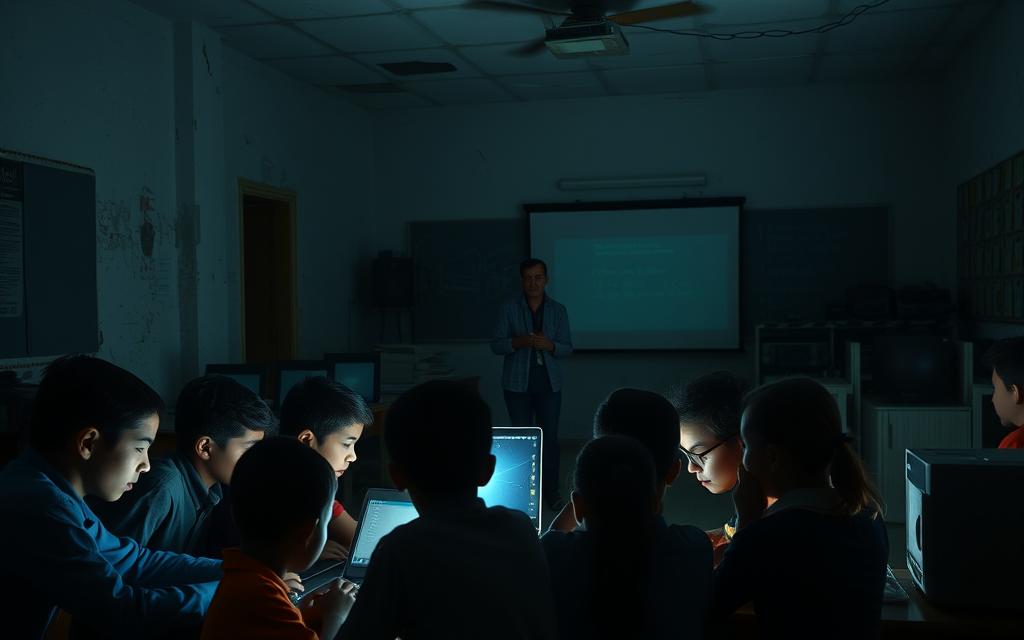
Studies show that having technology at home helps students do better in school. During the COVID-19 pandemic, students with good technology at home learned more than those without.
This difference led to what teachers call the “COVID learning gap.” It showed that some groups, like those from lower-income families, fell behind more. The UNESCO Global Education Monitoring Report found that technology was key to keeping learning going when schools closed.
Students without enough technology face big challenges. They struggle with:
- Doing digital homework
- Finding online resources
- Joining virtual classes
- Learning to research on their own
Digital Literacy Skill Disparities
Unequal access also means some students miss out on learning digital skills. These skills are vital for school and for jobs in the future.
Students with regular access to technology get better at using digital tools. They learn how to work online and check information. But, students without this access fall behind, creating a gap in skills.
This gap makes it hard for students to:
- Use educational software well
- Check online information carefully
- Communicate online professionally
- Get used to new technology
College and Career Readiness Impacts
The gap in technology access affects how ready students are for college and their future careers. More and more, schools and colleges use digital tools for everything.
Students without technology at home find it hard to get ready for college. They struggle with online applications and digital portfolios. This can make it harder for them to go to college or get good jobs.
In the job world, knowing how to use technology is a must. Not having these skills can mean fewer job chances, lower pay, and less chance to move up at work.
Employers want people who can:
- Use industry software
- Work together online
- Keep up with new technology
- Use digital tools to solve problems
These effects show how unequal access to technology can harm students’ chances in school and in their careers.
Technological Solutions Bridging the Access Gap
New tech is helping to close the digital gap in schools. These solutions make learning fair for all, no matter their background.

Groups and companies are working hard to make digital learning available to everyone. Their efforts are a big step towards making sure all students can learn online.
Low-Cost Internet Options
Big internet providers are now helping out with special deals for low-income homes. They work with schools and local groups to offer fast internet at lower prices.
The Affordable Connectivity Programme is a big help from the government. It gives discounts on internet and devices for families who need them.
Local internet plans are also available. They offer fast internet, no credit checks, free setup, and no long-term contracts.
- High-speed broadband at reduced monthly rates
- No credit check requirements
- Free installation and equipment
- No long-term contract obligations
Affordable Device Programmes
Having the right devices is key for learning online. Many schools now give each student a laptop or tablet.
Charities and tech firms are also helping. They fix up old devices and give them to students who can’t afford new ones.
“Technology access should be a right, not a privilege. Our device programmes ensure every student has the tools they need to succeed in today’s digital classroom.”
Here’s a look at some affordable device programmes for schools:
| Programme Name | Device Types | Cost Range | Eligibility Requirements |
|---|---|---|---|
| ConnectED Initiative | Laptops, tablets | Free – $50 | Title I schools, low-income students |
| TechExchange Programme | Refurbished laptops | $25 – $100 | School partnership required |
| Digital Bridge Project | Tablets, Chromebooks | Free | Individual student application |
| Education Discount Programme | New devices | 30-40% below retail | School purchasing programmes |
Community Wi-Fi Initiatives
Community Wi-Fi is a new way to get internet in places where it’s hard to find. It sets up free or cheap internet in public spots.
Libraries, community centres, and public buildings are now open longer for Wi-Fi. Some places even have Wi-Fi buses that park in areas with no internet.
Municipal Wi-Fi is another big idea. It covers whole cities, so everyone can get online through public networks.
These Wi-Fi projects show how working together can solve internet problems. By using public spaces, communities can make sure everyone has access to the internet.
Digital Literacy as a Component of Access
Getting past the first step of having technology is just the start. True learning access means having the skills to use these tools well. Just having devices and internet isn’t enough without the right skills.
Defining Digital Literacy in Educational Context
Digital literacy is more than just knowing how to use a computer today. It’s about finding, checking, making, and sharing information online. It’s a key skill for learning in our digital world.
It’s not just about basic computer skills. It’s about thinking critically online, understanding digital rights, and being good with educational software. Students need to learn to use digital tools safely and effectively for research and making content.
Now, digital literacy also means understanding data, algorithms, and digital biases. These skills are essential for success in all subjects.
Training Programmes for Students and Families
Good training programmes meet the needs of students and their families. Many schools run evening workshops for parents and kids to learn together.
Successful programmes include:
- Basic device operation sessions for beginners
- Internet safety workshops on privacy and security
- Tutorials on educational software for learning apps
- Digital citizenship classes for safe online behaviour
Community centres and libraries often work with schools to offer more training. These programmes help families who are new to technology.
Integrating Digital Skills into Curriculum
Putting digital skills into the curriculum is the best way to teach them. Instead of separate subjects, teachers weave them into regular lessons.
Good ways to do this include:
| Subject Area | Digital Skill Focus | Integration Method |
|---|---|---|
| Language Arts | Digital research and citation | Online source evaluation exercises |
| Mathematics | Data analysis and visualisation | Spreadsheet and graphing activities |
| Science | Digital simulation and modelling | Virtual laboratory experiments |
| Social Studies | Digital citizenship and ethics | Online community projects |
This way, all students get the digital skills they need, no matter their home setup. Teachers get training to add these skills to their lessons.
Now, schools measure how well students are doing in digital skills along with their schoolwork. This ensures everyone has a fair chance to learn.
Future Projections and Emerging Challenges
As tech in schools keeps getting better, we need to think about how to make sure everyone has access. The next few years will bring both chances and challenges in making tech fair for all.
Technology Evolution and Access Requirements
Future classrooms will need more than just basic gadgets. They’ll need advanced tools like AI, virtual reality, and cloud-based systems.
These new tools mean we need more than just fast internet. Students will need:
- Fast internet that can handle lots of data
- Devices that can run complex programs
- Regular updates to keep up with new tech
The difference between what’s needed and what’s available is growing. This raises big questions about fairness.
Sustainability of Current Solutions
Many quick fixes from the pandemic are facing funding issues. One-time gifts and emergency devices can’t meet long-term needs.
Big challenges include:
- Keeping up with tech changes by replacing devices
- Finding steady money for internet help
- Building lasting solutions instead of quick fixes
Without lasting funding, we risk losing the progress we’ve made.
Emerging Technologies and Their Access Implications
New tech offers hope but also risks. AI can tailor learning, but it needs lots of power. Virtual reality can change lessons, but it’s expensive.
These new tools might create a divide. Only schools with lots of resources can use the latest tech.
We must plan ahead to avoid making things worse. We need to make sure new tech is available to everyone, not just some.
Conclusion
The digital divide in American education is a big challenge that needs constant focus. Our study shows big gaps in home technology access. These gaps affect students’ results in different ways.
Our summary shows that internet, device quality, and digital skills are not evenly spread. The COVID-19 pandemic made these gaps clear. Schools had to quickly find new ways to teach.
Programmes like the Emergency Broadband Benefit Programme and school efforts have helped. Community help and affordable tech solutions also offer hope.
Real educational fairness is more than just having devices and internet. Students also need to learn how to use technology well. They need ongoing support to do well in today’s tech-based learning.
This conclusion highlights the need for a big plan from government, schools, and communities. We need to keep investing in tech, digital skills, and lasting programmes. This will decide how well students do in school.
The fight for equal tech access is not over. Working together to fix these issues will shape education and chances for the future.
