



The digital marketplace is growing fast. It’s expected to hit $6.48 trillion by 2029. This growth is about 10% every year, bringing both chances and hurdles for businesses.
To stay ahead, companies need to invest wisely in tech. A strong e-commerce technology stack is key. It helps cut costs and make customers happier.
This piece looks at what makes today’s online retail systems tick. We’ll dive into platform designs, payment systems, security measures, and new tech.
Knowing these tech basics is vital for any business wanting to thrive online. The right tech choices can boost profits and improve market standing.
Foundational Technologies for E-commerce Operations
To build a successful e-commerce site, you need a strong tech base. This base handles user interactions and data management. The right mix of web frameworks and databases makes operations smooth and scalable.
Web Development Frameworks and Languages
Today’s e-commerce sites use advanced web frameworks for engaging shopping experiences. These technologies ensure fast, responsive sites and handle complex business tasks.
JavaScript and Its Frameworks: React, Angular, Vue
JavaScript frameworks are key for interactive features shoppers love. React, Angular, and Vue.js help developers create dynamic sites with updates in real-time.
These frameworks make shopping cart updates and product filtering smooth. They also check inventory live, without needing to refresh the page. This keeps customers engaged and happy.
While front-end frameworks focus on user experience, server-side tech handles business logic. Node.js, PHP, and Python manage orders, user login, and payments.
Related Posts:
- How Technology Is Changing Retail From E-commerce to AI

- How Technology Affects Urbanization Smart Cities and…

- What Is Intel vPro Technology Enhanced Business Computing

- What Can We Do With Technology Endless Possibilities

- How Many Students Have Access to Technology at Home…

- What Does Raytheon Technologies Make Defense and…

These systems ensure secure and efficient operations like payment and inventory management. They’re the backbone of e-commerce, though customers don’t see them.
Database Management Systems
Choosing the right database is key for e-commerce success. Different data types need different storage solutions, from financial records to product info.
SQL Databases: MySQL, PostgreSQL
SQL databases are reliable for financial and user data. MySQL and PostgreSQL ensure accurate and secure payment info.
They’re great for structured data like orders and customer profiles. Every transaction must be precise here.
NoSQL Databases: MongoDB, Cassandra
NoSQL databases are flexible for unstructured data. MongoDB and Cassandra scale to manage large product catalogues and user content.
They support fast development and diverse data types. Their flexible nature helps businesses adapt quickly.
| Database Type | Primary Use Cases | Key Advantages | Popular Options |
|---|---|---|---|
| SQL Databases | Financial transactions, user accounts, order management | Strong consistency, ACID compliance, relational integrity | MySQL, PostgreSQL |
| NoSQL Databases | Product catalogues, user content, session data | Horizontal scaling, flexible schema, high performance | MongoDB, Cassandra |
| In-Memory Databases | Shopping carts, session storage, caching | Extreme speed, real-time processing | Redis, Memcached |
| Search Databases | Product search, recommendations | Full-text search, relevance scoring | Elasticsearch, Solr |
Combining these technologies creates a solid base for e-commerce. Proper use ensures sites can grow while keeping performance and security high.
What are the Technologies Used in E-commerce
Today’s e-commerce uses a mix of user-friendly platforms and strong backend systems. This setup helps businesses offer smooth shopping experiences. It also handles complex tasks behind the scenes.
Core Platform Technologies
The platform technology a business chooses is key. It affects how well an online store works and grows. Companies pick between flexible content management systems or special e-commerce platforms based on their needs.
Content Management Systems (CMS): WordPress, Drupal
Systems like WordPress and Drupal are great for e-commerce sites. WordPress, with WooCommerce, becomes a strong selling tool. Drupal offers lots of customisation options through its modules.
These CMS solutions are best when businesses want:
- Websites full of content that can sell things
- Custom user experiences
- Integration with their content plans
E-commerce Specific Platforms: Magento, Shopify
Dedicated e-commerce platforms have features just for online shopping. Magento is open-source and great for bigger businesses. Shopify is easy to start with and manage.
These platforms have:
- Payment systems built-in
- Tools for managing stock
- Ready-made designs and themes
- App stores for more features
Backend Infrastructure
The backend is the engine that makes e-commerce work. It makes sure the site is reliable, secure, and can grow.
Cloud Computing Services: AWS, Microsoft Azure
Cloud services have changed e-commerce by providing scalable resources. Amazon Web Services (AWS) and Microsoft Azure offer top solutions for online stores.
These services give:
- More computing power when needed
- Global networks for fast content delivery
- Managed databases
- Strong security features
Switching to cloud infrastructure lets businesses of all sizes use top tech without big costs. This supports the changing needs of e-commerce technology.
Containerisation and Orchestration: Docker, Kubernetes
Modern e-commerce uses containerisation for consistent environments. Docker packages apps with their needs into standard units. Kubernetes then manages these containers across servers and environments.
This method gives:
- Same performance in development and production
- Scaling during busy times
- Best use of resources
- Easier updates and rollbacks
Container orchestration is at the forefront of managing e-commerce infrastructure. It helps businesses stay available while saving on costs.
Types of E-commerce Platforms
Choosing the right e-commerce platform is a big decision. It affects your business’s growth and technical needs. You have to decide between open-source and SaaS platforms. Each has its own benefits in terms of control and flexibility.

Knowing the differences helps businesses match their tech skills with their goals. The debate between open-source vs SaaS is about finding the right balance. It’s about how much you want to customise and how easy you want it to be to manage.
Open-Source Platforms
Open-source platforms let you see and change the code. They need technical know-how but offer lots of flexibility. They’re great for businesses with unique needs.
Magento: Features and Customisation Capabilities
Magento is a top choice in open-source e-commerce. It’s known for its strong features and custom options. It has:
- Advanced product management with many variants and custom attributes
- Comprehensive marketing and SEO tools built into the core system
- Flexible checkout and payment options with numerous extensions
- Powerful customer segmentation and personalisation features
Businesses pick Magento for complete control over their store. Its design lets developers create custom solutions for their business.
WooCommerce: Integration with WordPress
WooCommerce turns WordPress sites into full e-commerce stores. It’s great for:
- Using existing WordPress themes and plugins
- Combining content management with shopping features
- Having a big library of extensions for more features
- Keeping a user-friendly interface
WooCommerce is perfect for WordPress users. It brings e-commerce to content marketing in one place.
Proprietary SaaS Platforms
SaaS platforms offer hosted solutions. The provider takes care of the tech, security, and updates. They make running a business easier by handling the tech stuff.
Shopify: All-in-One Solution for SMEs
Shopify has changed e-commerce for small and medium businesses. It’s easy to use and has:
- Quick setup with little tech knowledge needed
- Integrated hosting, security, and payment processing
- A big app ecosystem for extra features
- 24/7 customer support and reliability
Shopify handles the tech stuff so business owners can focus on marketing and sales.
BigCommerce: Scalability for Growing Businesses
BigCommerce is all about supporting business growth. It has built-in features that reduce the need for third-party apps. It’s known for its platform scalability with:
- Native multi-channel selling across various marketplaces
- Advanced built-in features that eliminate app dependencies
- Flexible API architecture for custom integrations
- Enterprise-grade security and performance optimisations
BigCommerce is great for businesses growing fast. It handles more traffic and sales without slowing down.
| Platform Type | Technical Control | Maintenance Responsibility | Customisation Flexibility | Ideal For |
|---|---|---|---|---|
| Open-Source (Magento) | Complete | Business/Developer | Unlimited | Large businesses with technical resources |
| Open-Source (WooCommerce) | High | Business/Developer | High | WordPress users seeking e-commerce |
| SaaS (Shopify) | Limited | Platform Provider | Moderate (via apps) | SMEs wanting ease of use |
| SaaS (BigCommerce) | Moderate | Platform Provider | High (built-in features) | Growing businesses needing scalability |
This comparison shows how each platform meets different business needs. It’s about finding the right balance between control and ease of use. Your choice depends on your business’s tech skills, growth goals, and resources.
Payment Gateway Technologies
Modern e-commerce relies on advanced payment gateway technologies. These systems enable secure transactions between customers and merchants. They act as a bridge, authorising payments and protecting sensitive financial information.
How Payment Gateways Process Transactions
A digital payment starts when a customer enters their card details at checkout. The payment gateway encrypts this information using advanced security protocols. It then sends it to the payment processor.
The processor checks with the customer’s bank to verify funds and request authorisation. Once approved, the funds are transferred to the merchant’s account, usually within one to three business days.
Encryption Protocols: SSL/TLS
Secure Sockets Layer (SSL) and Transport Layer Security (TLS) protocols create encrypted links. They ensure all data passed between merchants and customers remains private and secure.
Seeing the padlock icon in your browser’s address bar means SSL/TLS encryption is protecting your online payment processing session.
Tokenisation for Secure Data Handling
Tokenisation replaces sensitive card details with unique symbols. These symbols retain essential information without compromising security. Tokens can be stored safely for future transactions, keeping actual card data protected.
This method significantly reduces fraud risk. Merchants never handle actual card numbers during transaction processing.
Major Payment Gateway Providers
Several prominent companies dominate the payment gateway landscape. Each offers distinct advantages for different business needs. Understanding their specialities helps merchants choose the best solution.
PayPal: User-Friendly Integration
PayPal is one of the most recognised names in digital payments. It is celebrated for its straightforward implementation process. Even businesses with limited technical resources can integrate PayPal’s payment solutions quickly.
The platform’s widespread consumer trust translates into higher conversion rates. Shoppers feel comfortable completing transactions through a familiar system.
Stripe: Developer-Centric APIs
Stripe has gained significant traction among technology-focused businesses. Its powerful application programming interfaces (APIs) offer flexibility. Developers can create customised checkout experiences and subscription management systems.
The platform’s extensive documentation and developer tools make it ideal for businesses requiring tailored payment workflows and advanced functionality.
“The right payment gateway doesn’t just process transactions—it enhances customer trust and streamlines financial operations.”
Choosing between these providers depends on your business’s technical capabilities, budget, and specific feature requirements. Both options deliver reliable secure transactions while providing different approaches to online payment processing integration.
Security Technologies in E-commerce
Keeping customer data safe and ensuring transactions are secure is key for online shops. Today’s e-commerce security standards have many layers. These include following rules and using the latest tech to protect both businesses and customers.

Data Protection Measures
Keeping data safe starts with following rules and using systems to find threats early. These steps help make sure financial info and personal details are safe.
PCI DSS Compliance Requirements
The Payment Card Industry Data Security Standard is very important for shops that take card payments. To meet PCI DSS, shops must follow certain security steps, like:
- Building and maintaining secure network systems
- Protecting cardholder data through encryption
- Implementing strong access control measures
- Regularly monitoring and testing networks
- Maintaining an information security policy
If a shop doesn’t follow PCI DSS, it could face big fines and lose the right to process payments. So, it’s a must for online shops.
Fraud Detection Systems: Machine Learning Algorithms
Today’s fraud prevention uses more than just simple rules. Advanced machine learning looks at lots of data quickly to spot fraud.
These systems keep getting better at spotting threats and cut down on false alarms. They look at how users act, their devices, and past transactions to judge the risk.
Authentication and Access Control
Checking who is accessing a site is another important part of e-commerce security. Strong ways to check identities make sure only the right people can get into sensitive areas.
Two-Factor Authentication (2FA)
Two-factor authentication adds an extra step to log in. Users need to show two things, like a password and a code from their phone, to get in.
This makes it much harder for hackers to get in, even if they have your password.
OAuth and Single Sign-On (SSO)
OAuth lets users share some info with other sites without giving out passwords. It’s a way to authorise access without sharing sensitive info.
Single Sign-On lets users log into many sites with just one set of details. It makes things easier for users and keeps things secure by reducing the need for many passwords. For more on these security tools, check out our guide to security tools in ecommerce.
These tools help find a good balance between keeping things safe and making things easy for users. Too much security can make users unhappy.
Mobile Commerce Technologies
Mobile shopping has changed how businesses do e-commerce. Now, about 60% of online sales happen on mobile devices. So, using m-commerce technologies well is key for success. This part talks about the tech needed for a good mobile site.
Responsive Web Design Principles
Responsive design makes your website work on any screen size. It’s a key part of mobile optimisation. It makes sure users have a good experience on all devices.
CSS Frameworks: Bootstrap, Foundation
CSS frameworks make responsive design easier. Bootstrap and Foundation have pre-made parts and grids. They adjust content layout based on the device.
These frameworks help a lot:
- They speed up development with reusable parts
- They keep styling the same on all devices
- They make content responsive without extra media queries
- They get security updates and community help
Businesses can choose between Progressive Web Apps or native apps. PWAs work in web browsers but feel like apps. Native apps are made for iOS or Android.
| Feature | Progressive Web Apps | Native Apps |
|---|---|---|
| Development Cost | Lower (single codebase) | Higher (platform-specific) |
| Installation Required | No | Yes |
| App Store Distribution | Not required | Required |
| Device Feature Access | Limited | Full access |
| Offline Functionality | Basic | Advanced |
Mobile Payment Systems
Fast checkout processes boost mobile sales. Modern mobile payment systems make transactions quick and secure. They store customer info safely.
Apple Pay and Google Pay Integration
Adding Apple Pay and Google Pay is key for mobile shopping. They use tokenisation to keep card data safe during payments.
This method has many security benefits:
- Card numbers never go to merchant systems
- Each transaction gets a unique code
- Biometric checks add more security
- Quick checkouts lead to more sales
NFC and Contactless Payment Technologies
Near Field Communication (NFC) lets devices make payments by touching. It’s the base for tap-to-pay in mobile wallets and terminals.
NFC payments work like this:
- Customer checks in with fingerprint or face
- Device makes a unique code for the transaction
- Terminal reads the payment info wirelessly
- Payment processor checks and finishes the deal
NFC and tokenisation make contactless payments safe and fast. They protect both buyers and sellers from fraud.
Analytics and Personalisation Technologies
Today, e-commerce success relies on turning data into smart customer experiences. These experiences drive growth and keep customers loyal. Advanced analytics and personalisation tools are key for retailers to stand out online.
Data Collection and Analysis Tools
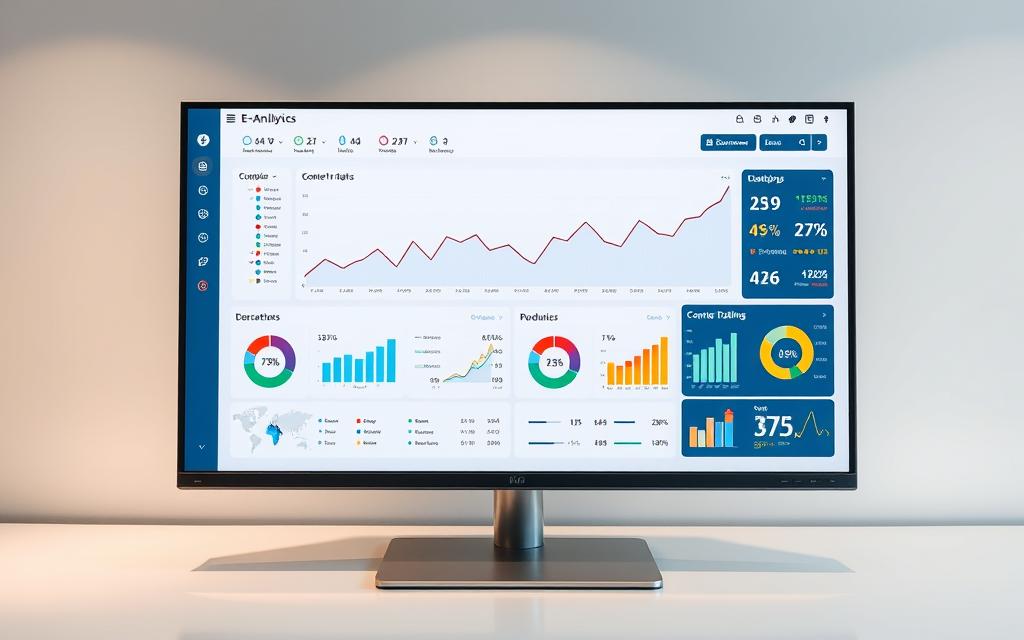
Data analytics in e-commerce starts with good measurement tools. These tools track everything from first visits to final buys. They create detailed maps of customer behaviour.
Google Analytics for E-commerce Tracking
Google Analytics gives merchants deep insights into customer paths. It tracks important metrics like:
- Traffic sources and how customers find you
- Conversion rates by product
- How customers shop
- How much value customers bring over time
Using it right helps businesses spot top products, improve marketing, and see when people buy more.
CRM systems bring together customer data from all interactions. They help businesses with:
- Personalised marketing
- Tracking customer service
- Targeted campaigns
- Managing loyalty programs
Top CRMs like Salesforce and HubSpot work well with e-commerce sites. They ensure customers get the same great experience everywhere.
AI-Driven Personalisation
Artificial intelligence has changed how online stores offer custom shopping experiences. AI personalisation looks at lots of data to guess what customers like. It then makes interactions personal.
Recommendation Engines: Algorithms and Implementation
Today’s recommendation engines use smart algorithms to find the best products for each customer. They look at many data points at once. They use:
- Collaborative filtering – finding similar users’ likes
- Content-based filtering – matching products to user interests
- Hybrid approaches – mixing methods
Setting up these systems needs good data and regular updates to keep them accurate.
Chatbots for Customer Service
AI chatbots have changed customer service by providing quick, personal help. They use NLP to:
- Understand what customers say
- Offer product suggestions based on what’s said
- Handle returns and exchanges on their own
- Pass on tough issues to people
Success stories, like PrintAbout’s “Printy” chatbot, show AI can handle lots of chats. It cuts costs and speeds up responses.
Combining advanced analytics with AI personalisation creates a cycle of improvement. Each interaction adds to the data that makes future experiences better. This cycle is at the forefront of e-commerce technology.
Supply Chain and Logistics Technologies
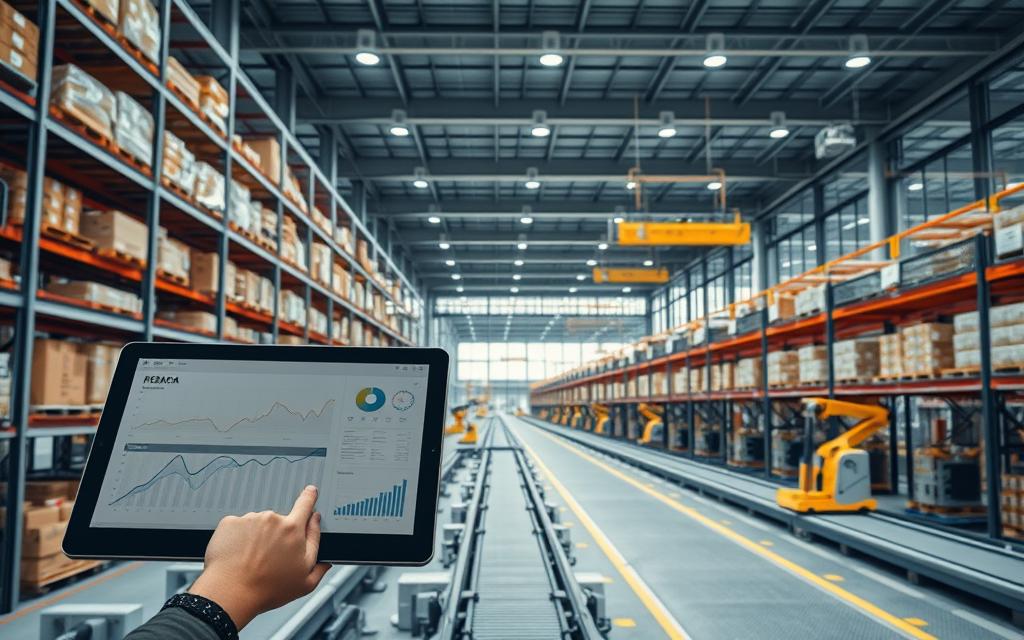
Behind the scenes of e-commerce, advanced supply chain and logistics technology is key. It ensures products get from warehouses to customers smoothly. This creates trust and loyalty.
Inventory Management Systems
Modern inventory systems give businesses the visibility they need. They track stock levels in real-time across different places.
Real-Time Stock Level Monitoring
Real-time monitoring stops overselling and stockouts. It updates stock levels instantly when a sale is made. This avoids cancelled orders.
It also sends alerts when it’s time to restock. This way, businesses don’t miss out on sales.
Integration with Warehouse Management Systems (WMS)
Inventory and WMS systems work together well. The WMS handles warehouse tasks from start to finish.
This teamwork keeps inventory data up to date. It ensures digital records match physical stock.
Order Fulfilment Technologies
After a purchase, advanced technologies handle delivery. They make the post-purchase process smooth, from shipping costs to tracking updates.
Automated Shipping Calculators
Automated shipping calculators figure out costs at checkout. They consider package details and shipping method for accurate prices.
Customers get clear prices upfront. Businesses save time with automated rates.
Carrier API Integrations: FedEx, UPS
APIs from FedEx and UPS make shipping easier. They automate label creation and tracking updates.
When ready, the system finds the best rates and sends labels. Customers get tracking info right away.
These integrations also help with international shipping. They make global e-commerce smoother.
Emerging Technologies in E-commerce
The world of e-commerce is changing fast with new tech. These changes mix digital and real-world shopping. They solve old problems and open up new chances for everyone.
Blockchain for Transparency and Security
Blockchain is changing how we do online shopping. It’s a new way to keep track of deals. It makes online shopping safer and more open.
It keeps a record of deals that can’t be changed. This is great for building trust in online shops.
Smart Contracts in Supply Chain
Smart contracts make the supply chain work better. They are like self-running contracts that check things off the list. They cut out middlemen and speed things up.
When certain things happen, smart contracts do things like pay people or send stuff. This cuts down on mistakes and makes things run smoother.
Cryptocurrency Payments: Bitcoin, Ethereum
Cryptocurrencies like Bitcoin and Ethereum let you pay without banks. They make it easy to send money across borders. This is good for people who like new ways to pay.
Even though they can be a bit shaky, more shops are starting to take them. This is because they appeal to people who like new tech.
Augmented Reality for Product Visualisation
Augmented reality (AR) adds digital stuff to the real world. It uses phones or AR glasses. This changes how we see products before we buy them.
AR solves the problem of not being able to touch products online. It lets you see how things would look on you. This makes buying things online less scary.
AR Try-On Features for Fashion E-commerce
Fashion shops use AR to let you try on clothes virtually. Tools like Fits.me use your body shape to show you how clothes fit. This is really good for avoiding returns.
It works by looking at how you move and your body shape. This makes it very accurate. It’s a big help for online fashion shops.
Furniture Placement Tools using AR
Home shops use AR to show how furniture fits in your home. You can see how a sofa or table looks in your room. It’s all done with your phone camera.
This helps you buy furniture with confidence. It shows things in real size. It’s very useful for planning your home.
| Technology | Primary Application | Key Benefits | Implementation Challenge |
|---|---|---|---|
| Blockchain | Supply chain transparency | Immutable records, reduced fraud | Integration complexity |
| Smart Contracts | Automated transactions | Process efficiency, cost reduction | Legal framework adaptation |
| Cryptocurrency Payments | Alternative payment methods | Borderless transactions, lower fees | Price volatility management |
| AR Try-On Features | Fashion visualisation | Reduced returns, enhanced confidence | Technical accuracy requirements |
| AR Furniture Placement | Spatial visualisation | Purchase certainty, better planning | Measurement precision needs |
These new techs are at the forefront of e-commerce. Blockchain and AR are getting better. They give retailers cool tools and better shopping for customers.
Using these techs right needs careful planning. But, they offer big wins for happy customers and efficient shops. They’re worth thinking about for e-commerce leaders.
Integration Technologies and APIs
API integration is key for modern online businesses. It lets different software systems talk to each other smoothly. This makes everything work together as one.
Without good integration, e-commerce sites can’t use all the tools they need. They miss out on the benefits of external services.
Today’s e-commerce world needs smart integration to work well. It automates tasks and keeps data in sync across systems. This turns simple platforms into powerful tools for growing businesses.
RESTful APIs for System Communication
RESTful APIs are the go-to for talking between systems in e-commerce. They use HTTP requests to manage resources, making them perfect for web apps. Each request has all the info needed, thanks to being stateless.
Most e-commerce sites have RESTful APIs. They let other systems do things like get product info or handle orders. This lets businesses add custom features beyond what’s already there.
API Design Best Practices
Good APIs are easy to use and follow a clear pattern. They use plural nouns for groups and start versioning early to keep things working together. This makes updates easier.
APIs need strong but simple security, like OAuth 2.0. Good docs with examples help developers get things right faster and avoid mistakes.
Webhooks for Real-Time Updates
Webhooks send updates as they happen, not when someone asks. They’re a push service that lets systems get news right away. This cuts down on server work and makes sure important things get done fast.
Webhooks are used for things like new orders, payment confirmations, and stock changes. They make workflows run smoothly and quickly, reacting to business events as they happen.
Third-Party Service Integrations
Third-party services add to what e-commerce platforms can do without needing to code from scratch. They bring in tools for marketing, finance, shipping, and customer service. The right mix makes a custom business setup.
APIs that connect to these services cut down on manual work and keep data in sync. This means less chance of mistakes and more time for important tasks.
Email Marketing Platforms: Mailchimp, SendGrid
Connecting to email marketing tools like Mailchimp and SendGrid automates sending messages to customers. They sync up customer info, what they’ve bought, and what they’ve done. This lets automated emails respond to what customers do.
Mailchimp is great for reminding customers about unfinished shopping and following up after a sale. SendGrid is for sending out things like order confirmations and shipping updates. Both offer detailed stats to see how well emails are doing.
Accounting Software: QuickBooks, Xero
Integrating with accounting software like QuickBooks and Xero makes managing money easier. They connect directly to e-commerce sites to handle bookkeeping tasks. This means sales, payments, and customer details are always up to date.
QuickBooks helps with invoices, matching payments, and taxes. Xero does the same but also supports different currencies for businesses worldwide. Both save time and reduce errors in accounting.
| Integration Type | Primary Function | Key Benefits | Implementation Complexity |
|---|---|---|---|
| RESTful APIs | Data retrieval and operations | Standardised, scalable communication | Medium |
| Webhooks | Real-time event notifications | Instant updates, reduced server load | Low-Medium |
| Email Marketing | Automated customer communication | Improved engagement, reduced manual effort | Low |
| Accounting Software | Financial data synchronisation | Automated bookkeeping, accurate reporting | Medium-High |
The right API strategy makes separate systems work together as one. Third-party services become part of the e-commerce platform when integrated well. This boosts efficiency and improves the shopping experience for customers.
Future Trends in E-commerce Technology
The digital world is changing fast, with new tech shaping how we shop and run businesses. Two big areas to watch are voice-activated shopping and tech for the environment.
Voice Commerce and Assistants
Voice shopping is changing how we buy things. Now, you can order with just your voice, not by browsing.
Amazon Alexa and Google Assistant Integration
Big tech companies are focusing on voice shopping. Amazon Alexa and Google Assistant make it easy to shop with your voice.
You can add items to lists, reorder, and buy things all by voice. It’s great for those who are always on the go.
Advanced tech makes voice shopping work. It understands what you say, not just specific words.
This tech gets better with time, learning from how we talk. It can handle different ways of speaking and even slang.
Sustainability Technologies
Now, making the planet greener is key in e-commerce. More people want to shop in a way that’s good for the environment.
Carbon Footprint Calculators for Shipping
Many sites now show how green your shipping is. They use calculators to show the impact of different choices.
Companies use this info to cut down on emissions. Customers like knowing they’re making a choice that’s better for the planet.
Eco-Friendly Packaging Solutions
New packaging tech is making things better. Companies are using materials that break down easily and making packaging that’s just right for what’s inside.
Big names like Amazon are leading the way. They’re cutting down on plastic and using electric vans. Others are following to be greener.
Most shoppers care about a company’s green efforts. Over 75% say they choose to buy based on how green a company is. This shows that being green is good for business.
| Sustainability Technology | Business Benefit | Consumer Impact |
|---|---|---|
| Carbon Footprint Calculators | Optimised logistics costs | Transparent environmental choices |
| Biodegradable Packaging | Reduced material expenses | Less household waste |
| Electric Delivery Vehicles | Lower fuel costs | Cleaner neighbourhood air quality |
| Packaging Size Optimisation | Reduced shipping costs | Less packaging to dispose |
These new techs are more than just handy or good for the planet. They show big changes in how we shop and what we expect from stores. Companies that get on board will do well in the changing digital world.
Conclusion
The digital marketplace needs a strong tech approach for lasting success. This summary shows how connected systems give businesses an edge. From safe payments to AI-driven personalisation, each part is key in today’s retail.
Businesses should focus on improving customer interaction and making operations smoother. Using mobile tech, analytics, and new things like AR helps them grow. Keeping data safe is also critical for keeping customers’ trust.
The online retail world will keep changing with new tech. Companies that adapt will do well in a tough market. Investing in e-commerce now gets them ready for future chances.
FAQ
What are the key technologies that underpin a modern e-commerce platform?
Modern e-commerce uses web frameworks like JavaScript for the front-end. Server-side languages like PHP or Python handle back-end tasks. Database systems like MySQL or MongoDB store data.
It also includes secure payment gateways and cloud services from AWS or Azure. APIs connect with external services.
How do open-source and SaaS e-commerce platforms differ in terms of technology and control?
Open-source platforms like Magento and WooCommerce offer more control and flexibility. They let businesses customise code and integrate with other systems.
On the other hand, SaaS platforms like Shopify and BigCommerce manage services. They provide hosting, security, and updates, but offer less customisation.
What security measures are essential for protecting customer data in e-commerce?
Key security steps include following PCI DSS standards and using encryption and tokenisation for payments. Advanced fraud detection and strong authentication methods are also vital.
These measures protect sensitive data and build trust with customers.
How do payment gateways like PayPal and Stripe process transactions securely?
Payment gateways use encryption and tokenisation to secure data. PayPal is easy to integrate and well-known. Stripe offers more flexibility for custom payment flows.
Both ensure secure, PCI-compliant transactions.
What role does mobile technology play in modern e-commerce strategies?
Mobile technology is key, including responsive web design and PWAs for mobile-like experiences. Mobile payment systems like Apple Pay and Google Pay offer secure transactions.
These features tap into the growing mobile commerce market.
How can businesses use data and AI to personalise the e-commerce experience?
Businesses use analytics and CRM systems to gather and analyse customer data. AI-driven technologies like recommendation engines and chatbots enhance the shopping experience.
These personalisation tactics boost engagement, sales, and efficiency.
What emerging technologies are shaping the future of e-commerce?
New technologies include blockchain for supply chain transparency and cryptocurrencies. Augmented reality (AR) enables virtual product try-ons in fashion and home decor.
Voice commerce and sustainability technologies also play a role, improving logistics and reducing environmental impact.
Why are integration technologies like APIs important for e-commerce operations?
APIs and webhooks connect e-commerce platforms with external services. This includes marketing tools, ERP systems, and payment processors.
Integration automates workflows, improves efficiency, and enables real-time data exchange.
How do inventory and order fulfilment technologies improve e-commerce efficiency?
Inventory management systems provide real-time visibility across sales channels and warehouses. Order fulfilment technologies automate shipping and tracking updates.
This reduces errors, speeds up delivery, and boosts customer satisfaction.
