

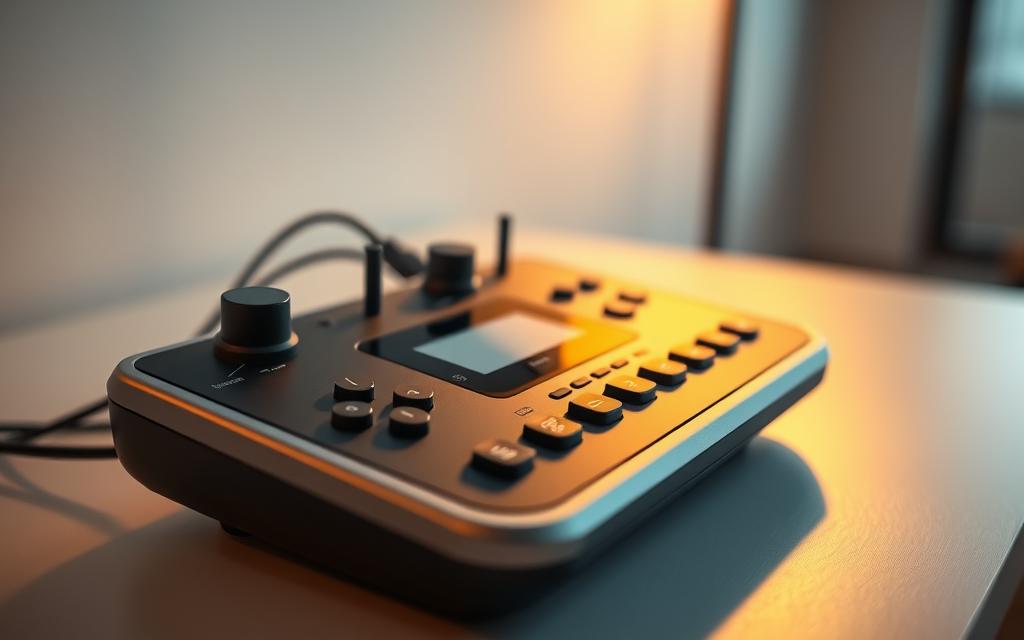
Modern assistive technology has changed how people with physical limits interact with the world. Sip and puff systems are key innovations for those facing big mobility hurdles.
This clever adaptive device works by simple breathing actions. Users control gadgets by sipping or puffing into a special mouthpiece.
It gives life-changing freedom to those with spinal cord injuries, cerebral palsy, or ALS. It’s a vital disability aid that helps bridge the gap between what people can do and what they want to do.
By controlling their breath, users can use computers, wheelchairs, and control their surroundings. This power changes daily life and boosts personal freedom.
What Is Sip and Puff Technology: Core Concepts
Sip and puff technology is a simple yet powerful way to control devices. It uses mouth movements to send digital signals. This technology has changed lives for many people.
Fundamental Operating Principles
The basic idea of sip and puff systems is based on air pressure. Users use a special mouthpiece to make suction (sip) or exhalation (puff). These actions change the air pressure inside the system.
Advanced sensors then turn these pressure changes into digital signals. The system can understand four main commands:
- Soft sip
- Hard sip
- Soft puff
- Hard puff
Each command does something different on connected devices. Today, you can change how these commands work to fit your needs.
Related Posts:






Historical Evolution and Development
The first sip and puff technology came out in the 1960s. It was called the Patient Operated Selector Mechanism (POSSUM). This was a big step forward for people with limited mobility.
Over time, sip and puff systems got better. In the 1970s and 1980s, they switched from mechanical to electronic. The 1990s brought digital control, making them more reliable and useful.
Now, we have the latest versions of sip and puff technology. They are wireless, adjustable, and work with many other devices. This shows how far assistive technology has come.
| Time Period | Key Development | Impact on Users |
|---|---|---|
| 1960s | POSSUM system introduction | First electronic environmental control |
| 1970s-1980s | Microprocessor integration | Improved reliability and command options |
| 1990s-2000s | Digital signal processing | Enhanced precision and customisation |
| 2010s-Present | Wireless connectivity and IoT integration | Seamless smart environment control |
Today, sip and puff technology keeps getting better. It aims to make things easier, cheaper, and work with new tech. This means users always get the best in control systems and interface design.
Mechanisms and Technical Operation
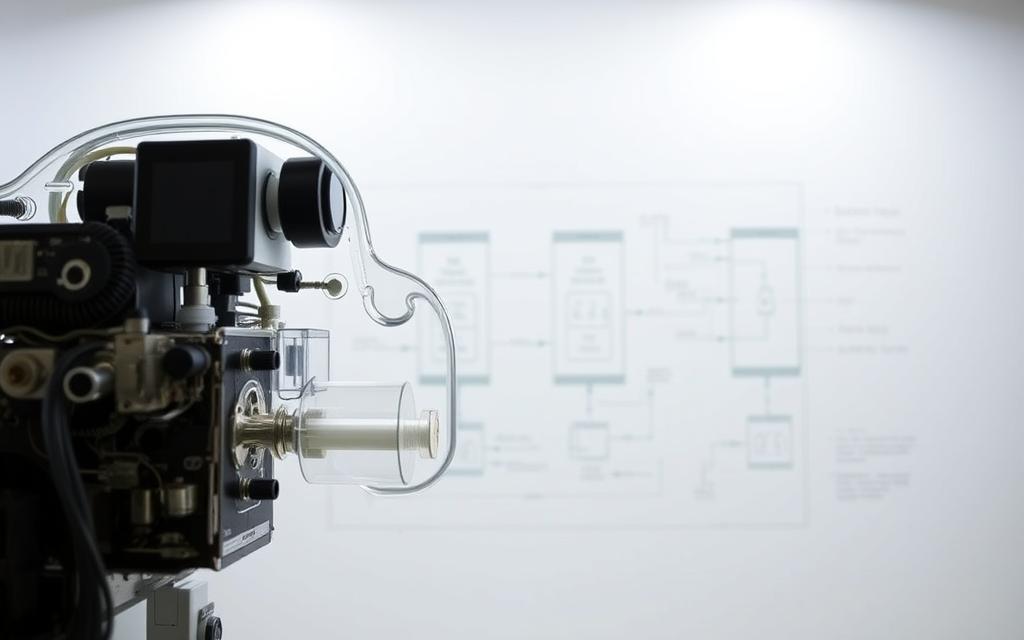
To understand sip and puff systems, we need to look at their parts and how they work together. This technology turns simple breath actions into exact digital commands. It does this through a detailed technical process.
Component Architecture and Functionality
The base of any sip and puff system has several important parts. The mouthpiece is the main way users interact, made for comfort and to detect airflow well.
Pressure transducers are key, turning breath pressure into electrical signals. They work with interface units to connect the user’s input to devices.
The whole system is built to work well through:
- Durable mouthpiece materials that last long
- High-sensitivity pressure detection for accurate commands
- Versatile connectivity options like wired and wireless
Signal Processing and Control Interpretation
After capturing breath commands, complex signal processing starts. This digital change happens when transducers turn air pressure changes into electronic signals.
Calibration is key here, setting up specific pressure levels for different breaths. This makes sure the system works well for each user’s breathing.
The last step is software interpretation, where signals become device commands. This detailed process lets users control things like cursor movement or environmental settings easily.
Target User Groups and Applications
Sip and puff technology helps many who face big mobility challenges. It offers tailored solutions for those with physical limitations. This lets them interact better with their world and digital tools.
Individuals with Spinal Cord Injuries
Quadriplegics and others with high-level spinal cord injuries greatly benefit. They often can’t move their limbs, making it hard to control things.
Sip and puff systems give them:
- Control over their wheelchairs
- Access to communication devices
- Power over their environment
- Use of computers without help
This tech is key for them to stay independent and do daily tasks.
People with Progressive Neurological Conditions
Those with ALS find sip and puff tech very helpful. As ALS gets worse, it’s hard to move, so they need tools that work even when they can’t.
Sip and puff systems are easy to use, even when other skills fade. Starting early helps users get good at it before they really need it.
This way, they can keep talking and controlling their space as their disease gets worse.
Those with Congenital Mobility Limitations
People born with cerebral palsy find sip and puff tech a great way to interact. It’s good for them from a young age because it’s easy to use.
Jared, for example, uses it for:
- Talking on the computer
- Accessing educational programs
- Controlling his living space
- Playing games and having fun
Its reliability is perfect for those who need steady control as they grow.
Each group gets something special from sip and puff tech. It’s made to fit their needs, making it work well for everyone.
System Components and Technical Specifications
The success of sip and puff technology depends on advanced hardware. These parts work together to turn breath into digital commands. This makes it easy for people with limited mobility to control devices.
Mouthpiece Design and Customisation Options
The mouthpiece is where users interact with the device. It comes in different styles to fit everyone’s needs. You can find flexible tubes or rigid wands.
There are also custom mounting options. You can choose head-mounted setups or fixed ones on wheelchairs or desks. This makes sure the device is always in the right place for comfort.
Pressure Sensing Technology and Transducers
At the core of the system is advanced pressure sensing tech. It picks up on the tiny pressure changes from sips and puffs. It’s important to tell the difference between commands and breathing.
Modern transducers use sensitive diaphragms to turn air pressure into electrical signals. They work within a range of ±2 cmH₂O. This means they catch even the smallest changes while ignoring background noise.
Interface Units and Control System Architecture
The interface unit is the brain of the system. It takes signals from the sensors and turns them into actions. It supports many output protocols for different devices.
These units can be programmed to change how the system responds. Some even learn how you breathe over time. They connect to computers, wheelchairs, and more through standard ports and wireless tech.
Today’s systems focus on being reliable and safe. They have backup systems and checks to keep working well. You can also adjust how sensitive the system is to fit your needs.
Device Control Capabilities and Applications
Sip and puff technology turns simple breath actions into complex commands. It opens up new possibilities for those with limited mobility. This system converts sips and puffs into detailed digital instructions across various platforms.
Powered Wheelchair Navigation Systems
Sip and puff systems offer wheelchair control through breath commands. Users use hard puffs to move forward and strong sips to stop.
More advanced systems use gentle sips for right turns and soft puffs for left turns. This allows for accurate navigation in different settings.
Modern systems also have speed control features. Users can change their speed by adjusting breath pressure.
Computer Access and Communication Solutions
Sip and puff technology changes computer access for those with mobility issues. Special software like Switch Access or SwitchX® turns breath signals into keyboard and mouse commands.
Users can now navigate the internet, create documents, and more with just their breath. This lets them fully join in digital communication and creative tasks.
Advanced systems also let users program custom commands. They can set up specific sip and puff patterns for favourite functions or shortcuts.
Environmental Control and Smart Home Integration
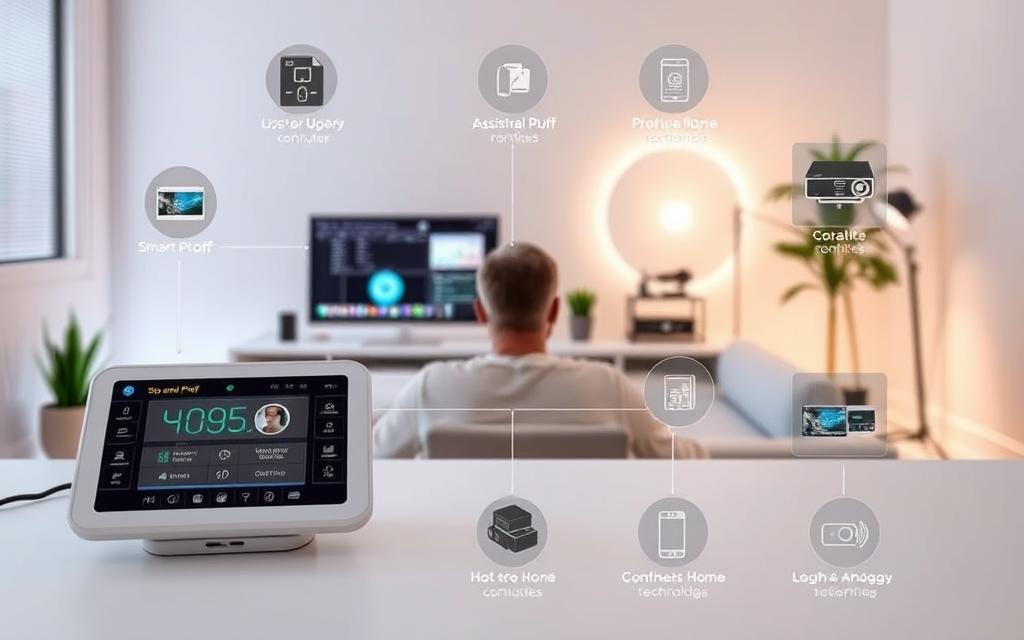
Sip and puff systems are great for environmental control, perfect for smart home setups. They connect to home devices through interface units.
Users can control many devices on their own. This greatly improves their daily independence.
Lighting and Electrical Appliance Management
Breath-controlled systems manage lighting with simple commands. Users can change brightness or room mood with specific sip patterns.
They can also control electrical appliances like TVs and kitchen devices with puff sequences. This includes security and climate control systems.
Entertainment System and Media Control
Entertainment systems become fully accessible with sip and puff technology. Users can control audio systems, streaming services, and gaming platforms.
They can adjust volume, change channels, and control playback. This ensures they have full control over their entertainment.
Advanced systems even let users activate voice assistants with breath commands. This makes controlling all smart home systems seamless.
Benefits and Advantages for Users
Sip and puff technology brings big changes to how we live. It gives us better control and lets us interact in our own way. This thoughtful design makes life better in many ways.
Enhanced Independence and Personal Autonomy
Sip and puff systems give us back control over our lives. We can do things on our own that we couldn’t before. This lets us live our lives how we want, when we want.
Feeling in control again is very important. Jared said:
“This technology gave me back the ability to interact with my world and my family on my own terms”
This freedom helps us with many daily tasks:
- Using powered wheelchairs
- Talking to loved ones
- Managing our living spaces
- Enjoying hobbies and fun activities
Customisation and Personalisation Features
Sip and puff systems are very flexible. They can be changed to fit each person’s needs and likes. This makes sure they work well and feel comfortable.
Some key features include:
- Settings that adjust to how hard you breathe
- Custom commands for complex tasks
- Different mouthpieces for comfort
- Layouts that match what you prefer
This flexibility means the tech fits with you, not the other way around. You can change both the parts and how it works.
Reliability and Operational Consistency
Sip and puff tech is very reliable. It works well because it’s connected directly to your actions. This makes it easy to trust and use every day.
It has many benefits:
- Quick responses to your commands
- Works well even when you’re tired
- Not easily affected by outside things
- Stays stable in different temperatures and conditions
This means you can count on it all day. It keeps working, even when you use it a lot, so you always have access to what you need.
Limitations and Practical Considerations
Sip and puff technology is amazing for control, but it has its limitations. It needs specific physical skills and settings to work best.
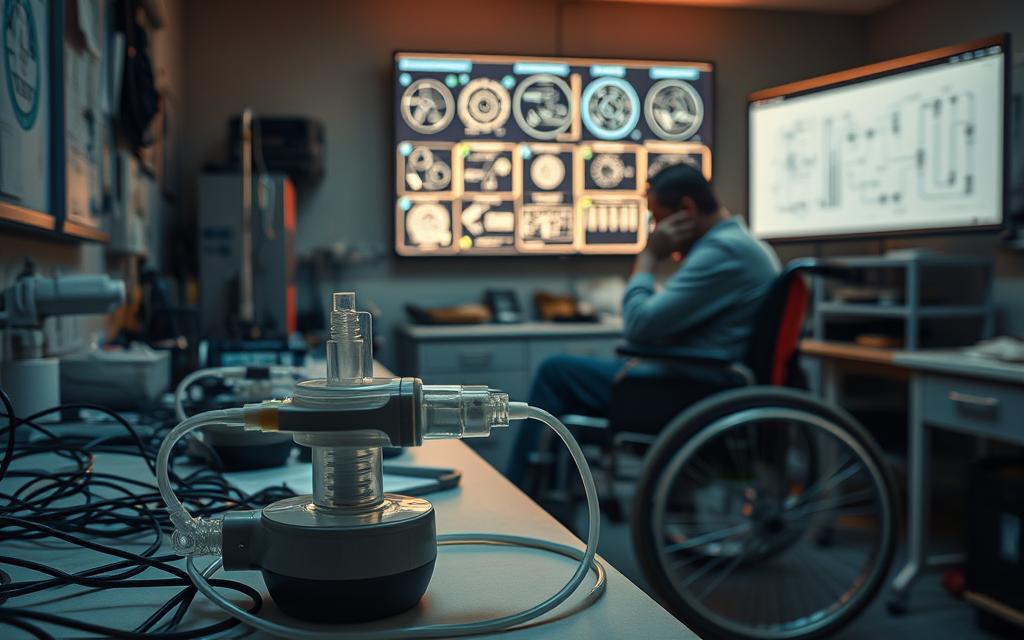
Physical Requirements and User Capability Assessment
To work well, you need good lung power and mouth control. What’s considered a “hard” or “soft” sip varies by person. So, getting a user assessment from a pro is key.
Experts check a few things:
- How strong your breathing is and if it stays the same
- How well you can move your mouth and lips
- If you can make different pressures with your mouth
- How long you can keep using it without getting tired
They decide if you need a standard or special setup. If your breathing isn’t strong enough, you might need something else.
Technical Constraints and Environmental Factors
There are technical constraints that can affect how well it works. The length of the tube limits how far you can move, usually about 1.5 metres from the unit.
Things like:
- What power it needs to work
- Interference from other signals
- How temperature affects the tube
- Keeping it dry to avoid problems
These need careful thought when setting up your space. The right setup helps avoid problems.
Learning Process and Adaptation Timeline
Getting good at using sip and puff takes time. People go through different stages of learning.
Here’s what usually happens:
- Learning to tell the difference between sips (1-2 weeks)
- Using it for simple tasks (2-4 weeks)
- Mastering more complex tasks (1-3 months)
- Getting even better at using it (always)
Staying consistent with practice helps you get better faster. Most people get good at it in six to eight weeks.
Knowing it takes time helps you keep going. Getting help from occupational therapists makes a big difference.
Selection Criteria and Implementation Process
Choosing the right sip and puff device is a detailed process. It’s all about finding the best fit for each person’s needs. This careful selection ensures the technology works well and meets the user’s lifestyle.
Setting it up right is key to success. It involves a step-by-step approach to guarantee the best results and user happiness.
Clinical Assessment and Prescription Guidelines
Starting with a clinical assessment is essential. Occupational therapists and specialists do thorough checks. They look at breathing, mouth skills, and thinking abilities to find the right match.
Guidelines for prescriptions focus on individual needs, not a one-size-fits-all approach. Experts consider daily activities, surroundings, and future goals. This ensures the chosen technology is beneficial and easy to use.
Users try out different mouthpieces and pressure levels during trials. This hands-on testing helps find the most comfortable and effective setup for each person.
Custom Fitting and System Calibration
Custom fitting is a vital step. Each user needs a mouthpiece and tubing that fit just right. Technicians work with users to make sure everything is comfortable and in the right place.
Calibration is about adjusting the system to match the user’s breathing. A trained technician does this. It sets the system up for reliable use.
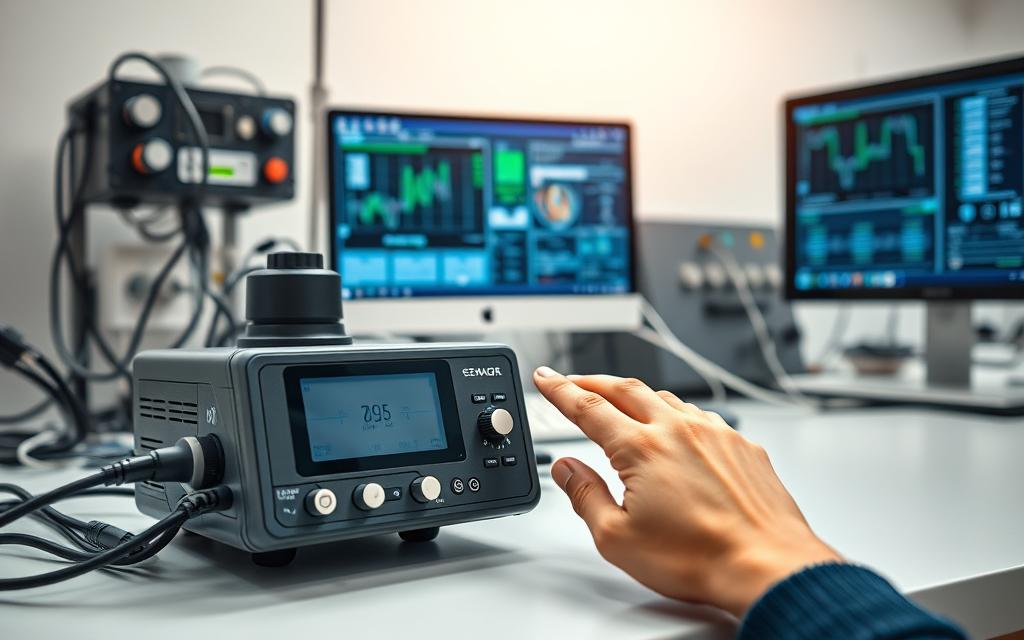
After the initial setup, fine-tuning continues as users get better at using the system. Sometimes, adjustments are needed to keep up with changes in abilities or preferences. This ensures the technology stays effective and responsive.
Integration with Complementary Assistive Technologies
Integrating sip and puff systems with other technologies makes them more powerful. They work together to create a complete support system. The patent documentation shows how this works.
These systems connect with things like environmental controls, computer access, and communication tools. This makes a single, unified system where sip and puff is the main control. It works with switches, special keyboards, and smart home systems.
Experts set up these systems to work together smoothly. They make sure sip and puff commands work across different platforms and devices. This approach boosts the technology’s usefulness and helps users be more independent.
Today’s systems can connect with advanced technologies like voice recognition and IoT devices. This growing compatibility keeps sip and puff technology up-to-date with new assistive solutions.
Training Methodology and Skill Development
Learning to use sip and puff technology needs a step-by-step approach. This method builds confidence and skill. It uses exercises that get harder as you learn, helping you use the technology well and avoiding frustration.
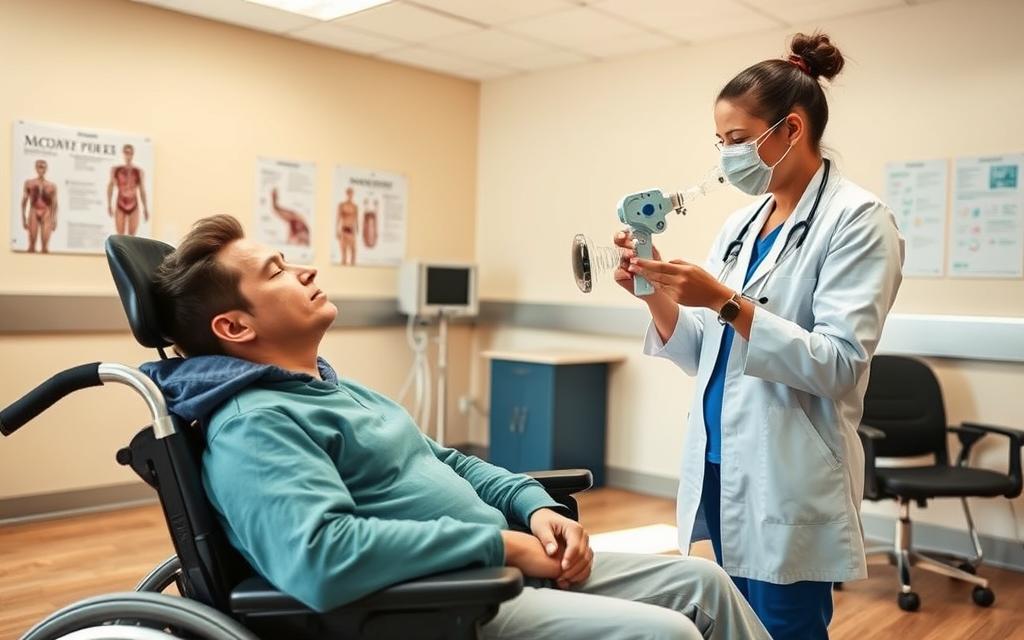
Initial Learning Techniques and Progressive Training
Start with simple breathing exercises to learn basic control. Practice steady breathing without trying to control the device at first. This phase helps build muscle memory and improves breathing, key for using the device well.
Then, move on to controlling basic functions with structured drills:
- Single command activation exercises
- Timing and duration practice sessions
- Error recovery techniques
- Consistency building repetitions
Keep training sessions short, 15-20 minutes, and do them often. This keeps you focused and helps you learn faster. Most people get the hang of it in 2-4 weeks with regular practice.
Advanced Control Strategies and Efficiency Optimisation
Once you’ve got the basics, you can learn more advanced techniques. These make using the device faster and easier.
Effective advanced training includes:
- Sequential command chaining for complex tasks
- Custom macro development for frequent operations
- Scanning system optimisation techniques
- Environmental adaptation strategies
Advanced users often create their own breathing patterns for different functions. This makes using the device more natural and reduces mistakes. Regular practice keeps these skills sharp.
Troubleshooting Common Operational Challenges
Even experienced users face problems that need solving. Knowing how to fix common issues keeps the device working well and boosts confidence.
Common problems include:
- Inconsistent breathing pressure
- Moisture accumulation in the mouthpiece
- Calibration drift over time
- Software configuration errors
Signal dropouts are another issue, usually due to connection problems or sensor issues. Regular checks can stop many problems before they start.
Software issues might need a pro, but you can learn basic checks. Keeping track of problems helps fix them faster.
Learning to solve problems is key to mastering sip and puff technology. It lets users stay independent and confident in fixing issues.
Future Technological Developments and Trends
Sip and puff technology is growing fast, with new ideas coming up in many areas. These trends will change how we interact with our surroundings. They will use advanced control systems.
Integration with Internet of Things and Smart Environments
The mix of sip and puff with IoT is a big step forward in assistive tech. Soon, users will control smart homes with just their breath.
Imagine changing lights, temperature, and entertainment without using different devices. This smooth connection makes smart homes more unified.
Future systems might include:
- Voice assistant compatibility for easier control
- Automated routines set by specific breathing patterns
- Remote monitoring for caregivers
- Work with big smart home systems
Advances in Sensor Technology and Control Precision
Sensor tech is getting better, leading to more detailed control. These advancements mean we can do more with our breath.
Today’s sensors can pick up on tiny pressure changes. This lets users do complex things with just a little breath.
Future developments might be:
- More pressure sensing for more commands
- Adaptive calibration that learns from you
- Biometric tracking for health info
- Quicker responses
Emerging Applications in Virtual and Augmented Reality
VR and AR open up new possibilities for sip and puff tech. These platforms could change how we explore digital worlds.
Early tests show great promise for immersive experiences. Users can move and interact in virtual spaces with just their breath.
The table below shows what VR and AR could offer:
| Application Type | Current Status | Future Promise | User Benefits |
|---|---|---|---|
| Virtual Navigation | Experimental | Full control of digital spaces | Complete freedom in digital worlds |
| Object Manipulation | Early stages | Accurate interaction | More creative freedom |
| Social VR Platforms | Just ideas | Easy communication | Deeper connections |
| Training Simulations | Small tests | Real skill building | Opportunities for career growth |
These new technologies show how sip and puff tech is getting better. The future looks bright for these systems and digital platforms.
More and more, experts see the value in these systems. They work together to make new features that meet real needs and are reliable.
The growth of sip and puff tech shows a bigger trend in making tech more accessible. Each step brings us closer to a world where technology is for everyone.
Support Resources and Accessibility Programmes
Finding the right support can really improve your experience with sip and puff technology. Many groups and programmes are out there to help you. They make it easier to set up and use your technology every day.
Professional Support Networks and User Communities
Talking to experts and other users can give you great tips. Occupational therapists can help figure out what you need. They suggest the best solutions for you.
Assistive technology specialists are there to help with setup and making changes. Peer support groups let you share your experiences and solve problems together. This way, you can learn from others.
Online communities are great for sharing knowledge. They connect people from all over. Here, you can find new ways to use your technology and get tips on how to make it work better.
Funding Options and Financial Support Schemes
There are many ways to get help with the cost of technology. Some private health insurance plans cover the cost of assistive technology. This can help a lot.
Government programmes offer support through disability benefits. Non-profit organisations also give grants or help with the cost of equipment. These options can make it easier to get the technology you need.
Some manufacturers offer payment plans or let you try their products for free. Looking into different funding options can increase your chances of getting help.
Technical Support and Maintenance Services
Good technical support keeps your system working well. Manufacturers usually provide warranty and repair services. This is important for keeping your technology in good shape.
Local centres for assistive technology can help with maintenance and adjustments. Many providers also offer remote help for software problems and updates. This saves you time and hassle.
Having a reliable technician can prevent long periods without your technology. Regular checks can find and fix problems before they cause trouble. This keeps your system running smoothly.
Keep a record of how your system is set up. This makes it easier to fix problems. Also, have the contact info for technical support ready. This way, you can get help quickly when you need it.
Conclusion
Sip and puff technology is a key tool for those with severe physical limitations. It helps them gain more independence. This technology is important for breaking down barriers in communication and controlling their environment.
The system is reliable and has many uses, from controlling wheelchairs to managing smart homes. It’s also important to have proper training and assessment. These steps improve the quality of life greatly.
Future developments will make this technology even more integrated and precise. It will continue to be a leader in inclusive innovation. Its effect on personal freedom is lasting and significant.
FAQ
What is sip and puff technology?
Sip and puff technology lets people with big physical challenges control devices. They use breath to send commands. It’s a way to be more independent.
Who can benefit from using a sip and puff system?
It helps those with spinal cord injuries, ALS, and cerebral palsy. It lets them control wheelchairs, computers, and more.
How does a sip and puff system work technically?
It has a mouthpiece, sensors, and a unit that connects everything. Breath changes are turned into signals. These signals control devices.
What types of devices can be controlled with sip and puff technology?
You can use it for wheelchairs, computers, and smart home gadgets. It makes controlling your environment easy.
What are the main components of a sip and puff system?
It has a mouthpiece, sensors, and a unit. These parts work together to control devices.
Are there any physical requirements for using sip and puff technology?
Yes, you need good lung power and mouth control. An occupational therapist will check if it’s right for you.
How long does it take to learn and adapt to using a sip and puff system?
It depends on the person. You start with simple commands. Getting better takes time and practice.
Can sip and puff systems be integrated with other assistive technologies?
Yes, they work with other tools and software. This makes using technology easier and more independent.
What support and funding options are available for acquiring a sip and puff system?
You can get help from therapists and specialists. There are also funding options to help pay for it.
What future developments are expected in sip and puff technology?
We’ll see more control over devices and better sensors. It will also work with new tech like virtual reality.
